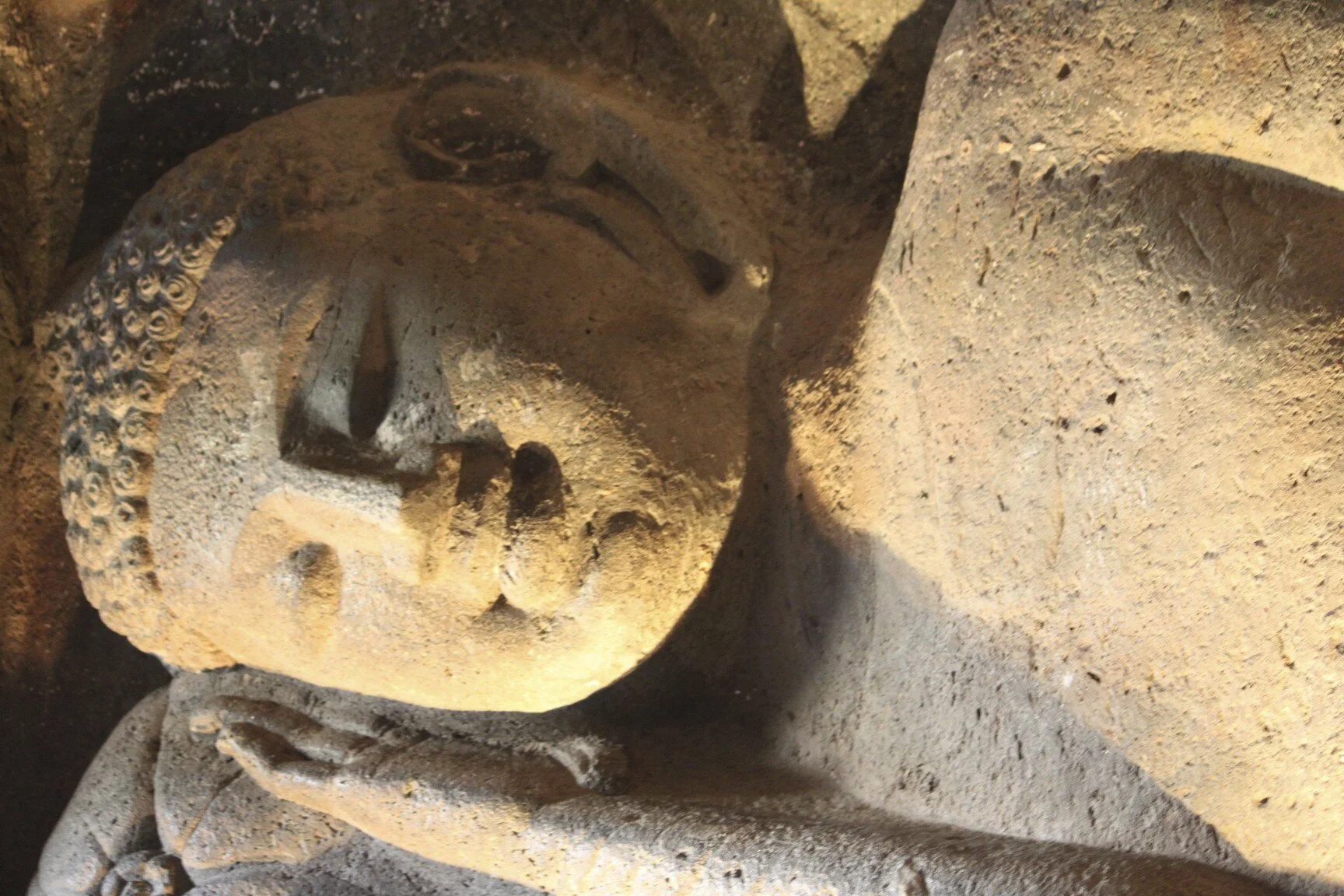
Surrounded by Buddhas as the Pandemic Unfolds

We live in a time now where most of our citizens are under siege from a creeping terror of the COVID-19 pandemic, and they lack any sense of security. People in the cities, towns, and countryside in the United States are scared for their own lives, the lives of their loved ones and their communities. They frantically search for gloves, masks, sanitizers, thermometers, and reassurance, as they leave their houses to buy the basic necessities.

And when you think about it, it’s ultimately a call for (and an expression of) universal love.  

The Greeks distinguished 4 different types of love: 

1. philia (friendship)

2. eros (romantic)

3. storge (familial), and 

4. agape: universal love. 

This is the way universal love looks: the random helping of an elder lady cross the street, delivering food to people who are shut in, offering the street person some help, holding the door open for someone who is struggling, running an errand for a sick neighbor, purchasing clothing made by women trying to reform from sexual trafficking, and so on.

This happens as people reach across the social and cultural “borders” in our society and say: I will help you no matter where you come from, or what you believe. This could also be described as unconditional affection and goodwill. 

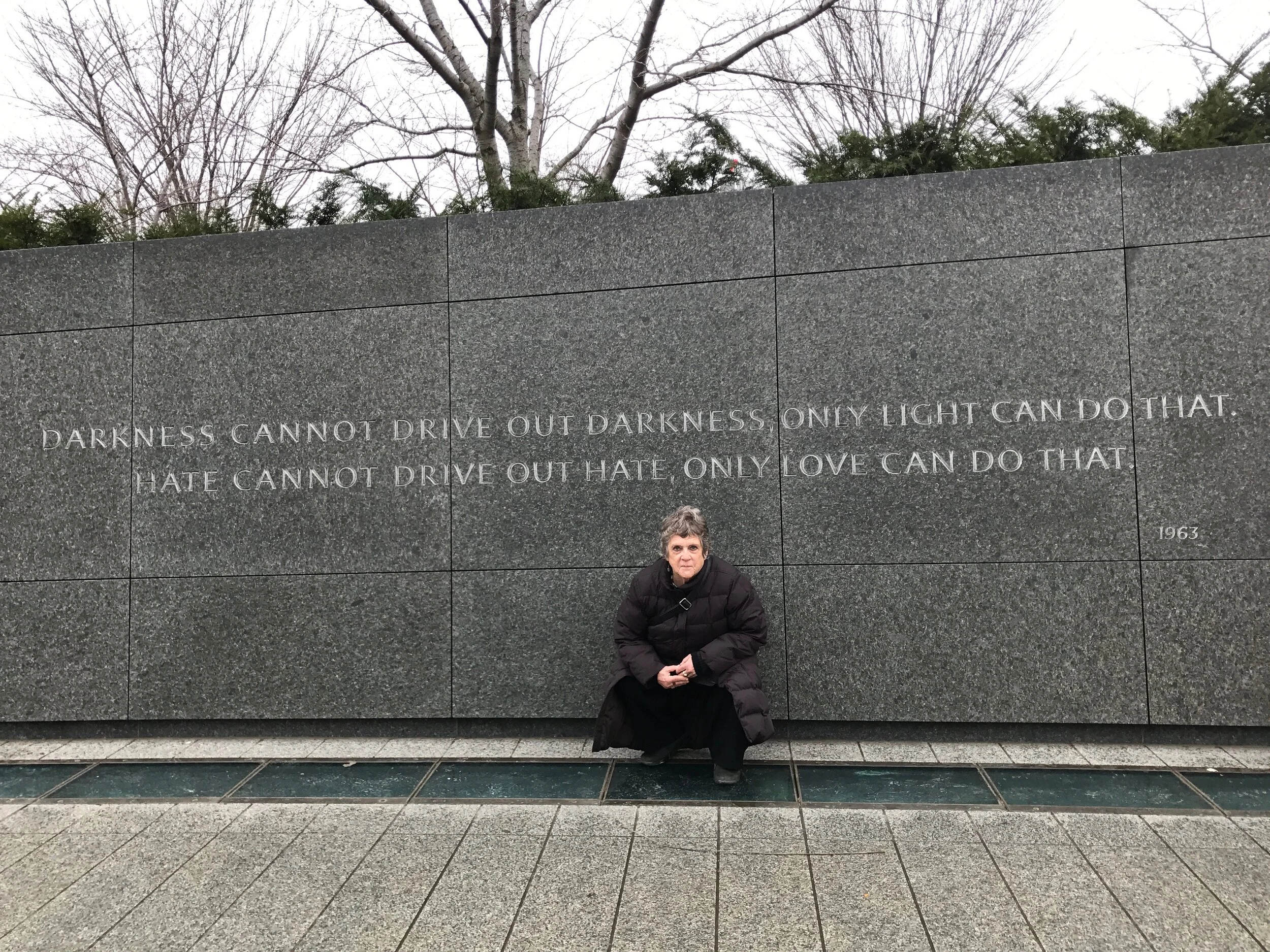
This love has been manifested by such great beings as Martin Luther King, Gandhi, Mother Teresa, Gotama Buddha, Jesus Christ, and the Dalai Lama. These teachers (and I call all of them teachers) had an all-embracing love for their fellow human beings and felt connected to them without judgment. 

And because the majority of communities in the nation are now in a state of “shelter in place,” many people find themself in pretty extreme isolation, staring at their own helplessness and anxiety.

While uncertainty and mystery rule the day during these weeks, as the casualties mount exponentially each day, and — lo and behold — people in communities around the world are transforming themselves into Bodhisattvas and Mother Teresas. 

• Doctors and nurses are putting their lives at risk, working inhuman hours to save other lives. 

• Restaurant workers are dedicating themselves to feeding a frightened and needy public despite obvious risks of exposure.

• Delivery people are working from early morning to night probably without proper protection to get much needed supplies to those who are housebound.

• All kinds of out of work people are sitting down and making masks on their own because of our dire shortage.

• Distilleries are making sanitizer. 

• Young people in medical school are volunteering to join the front lines in the hospitals, and many younger folks are volunteering to walk the dogs of seniors.

And the list goes on. 

Hospital tents are being built in metropolitan parks amidst the urgency of treating people and saving lives, journalists are working non-stop and for long hours from their homes to get the necessary information out to people, and city and state governments are easing up on many hardcore rules about debt and rent. 

As I write this, I keep thinking of more and more heroic souls who are working hard to make a difference in this crisis (and opportunity). 

My daughter is sheltering me (since I’m in the at-risk group of the population), returning to her important restaurant job because she must help them survive, and she brings home all our groceries. I have a granddaughter who works in an emergency room as a technician in Oklahoma, a situation we all hold in our hearts with trepidation. 

In The End, It’s All About Making A Difference 

When we can pitch in and support those in dire straits and make a difference, then we are better able to stomach the dark statistics and the tragic stories. We are strengthening our hearts and joining the larger effort against this biblical health crisis.

And quietly and persistently online, so many different businesses, schools, spiritual leaders, and health practitioners are inviting us to engage in webinars, or take courses (often for free) so we may support them emotionally and feel less disconnected. 

Because of the enormous economic fallout, we know many businesses could fall away and die under the weight of the crisis, and so we stay-at-home folks are urged to buy gift certificates, or donate money when possible to help shore up those who are in peril. 

From what I understand in all my internet traveling, these pleas for support seem to be making a difference on a deep human level. This too is a manifestation of agape, that universal love that says we are all responsible for one another, and we owe one another our care, thoughts, and our time. 

So, as I said, Christ and the Buddha (and more) are alive and working hard in communities large and small as diverse as San Francisco, Detroit, Portland, Austin, New Orleans, Albuquerque, Denver, St Louis, Charlotte, Oklahoma City, and so on and so on….

So Now I Look Inside My Heart

I’ve looked inside my heart and seen that I can use my financial resources to help businesses and various causes that are in more jeopardy now, and. I also can use my voice and speak up about what I see, how I feel about this tragedy, and how much I’m grateful to be a human with good intentions and some resources at this critical juncture. 

I will follow the saying of Martin Luther King who famously said, “I will choose love” when faced with racial hatred back in the ’60s, and I will write. 

Because words matter. Our voices matter. I beg you to give voice to your words, to remember your connection with your fellow humans. 

Write, sing, paint, knit, cook, dance, make phone calls, plant a garden… and please join these Bodhisattvas in our daily lives in the good fight, even if you have to do it from your living room couch! 

Our words matter.
Mag Dimond
Interview on Catching Z's: The Millennials Guide to Mindfulness

CZ 085: Mag Dimond, Heart Centered Human, World Traveler, and Author

This podcast is my journey as a curious millennial figuring out what it means to live fully through meditation by bringing on the greatest minds of our day.”

(In the words of Podcaster Nick Zolfo)

“I left this interview feeling more connected to the world and felt like I had traveled around the world as well.  Mag is a magnificent storyteller and has made traveling a center piece to her life and marrying those two things is wonderful to experience.” 

We chat about

  • How she got the travel bug at 11 years old when she lived in Italy for 3 years 

  • Why she started journaling as an outlet from her difficult upbringing

  • Feeling at home in many places abroad

  • What travel allowed her to find out about herself 

  • How connection is important for what she feels makes a place feel like home

  • Innate traits that we all possess as humans that she discovered in travel 

  • The importance of journaling in her adventures 

  • Common themes that arose in her journaling showing what she values in experiences

  • The impact that her grandmother had on her instilling compassion in her

  • Translating her journals to the book that she wrote, “Bowing to Elephants” 

  • How a moving experience with Elephants led to the title of her book 

  • Getting into meditation later in life after a masseuse advised her to 

  • How to forgive deeply and how she forgave her mother

  • Her favorite food and country around the world

  • Loving Kindness meditation to conclude! 

Enjoy it here. I sure did

— Nick Zolfo

Mag DimondMag Dimond
Why You Want To Listen to Women


Because March is Women’s National History Month, I want to take this opportunity to tease out just why I trust and cherish the instincts and the voices of women.

I recently invited people to honor women in 4 powerful ways:  

  1. pay more attention to women 

  2. honor a female elder

  3. read a book written by a woman 

  4. and – of course – vote for a woman 

To be honest, I have been conditioned to listening to women, (so maybe I’m slightly biased). 

Growing up in a female-dominated family, with two formidable grandmothers, a heartbreakingly clever, beautiful mother, some wonderful aunts, a few cousins, and a pair of stalwart girlfriends.  

My father, though physically in the picture was never there emotionally; I remember feeling sorry for him as he receded into the background and eventually out of my life.

Here are the 4 ways:

1. Pay More Attention To Women

Look around you and notice women whose paths you cross. Really notice them and have gratitude for their contributions to the world. 

I’m thinking now of a lovely lady called Debra who cuts my hair with the greatest of precision, and with love, whose friendship I have cultivated over the years simply because she was a master at making my hair and appearance look great, and she had a curious mind and infectious laugh. She always made me feel better about myself… We shared stories of family, travel, and of course politics.

This woman is a healer, and a good friend. I invite anyone reading this to look around and take stock of the women you notice as you move through your days, women doing seemingly ordinary unglamorous jobs, and consider their character and strength.

2. Honor a Female Elder

My mother’s sister whom we called “Pucky” is the first elder I honored… whose real name was Ellen, was a true family “character” – a writer, a woman who loved words and used them to make you laugh, gnash your teeth, and appreciate her lively mind.

She had beautiful dark brown eyes, but thick calves and an awkward way of moving about, she was prickly and opinionated when young, and even more so when she got older.  

She and my mother were quite a pair: Pucky was a reformed alcoholic who quit at 20, and my mother was a drunk who could never admit she had a problem, but forged ahead with her beauty and charm anyway, finally disappearing into a lonely, solitary old age.  

These two women had loved one another for what they had in common, which was a sharp wit, a love of good books and theater; they were passionate about the importance of humor and they loved one another.  

Aunt Pucky read my writing when I started to become serious, and told me I was really good; that meant a great deal to me, since my mother didn’t possess the courage to look at what I wrote. My aunt Pucky died about two weeks ago, and I think I will be missing her for quite a while, as contentious as she was. Her gift to me? She was a woman of substance who never gave up her dedication to living the life of a writer.


3. Read A Book Written By A Woman

I’ve been pouring through a rich and thoughtful book called These Truths by Jill Lepore, which is about the fragile experiment we call our American democracy.

She offers in these 600+ pages a vast and sensitive treatment of American history, with special attention to two particular wings of this history that were profoundly important: slavery, and the oppression of women. She shows how our idealistic system of government was severely challenged because of imperatives that both slavery and the subjugation of women presented.  

It’s a great read, a slow read, because of the vast amount of detail (with wonderful illustrations), and I’m particularly grateful that she created this narrative during this dark time in our history filled with ugly racial discrimination and continuing disrespect to women. She shines a bright light on the story of our improbable and dazzling idea of a democracy, she stretches our thinking (she educates!), and her prose is more lyrical than most historians I’ve read. She’s a true teacher, a creative soul who has persevered.

An additional thought on the subject of women’s books: If you’re not up for Jill Lepore’s elegant tome, there’s always Bowing to Elephants, my significantly shorter 250 page memoir that recounts one woman’s journey from loneliness and obscurity to self-realization, through traveling, studying, cooking, music, and of course through spiritual practice. I am enormously proud of this book, with its beautiful soulful cover, its touching and intimate story told in lyrical prose, and the message it carries that we humans are all of the same family. I want the book’s message to spread far and wide and inspire all who pick it up… Find out more here: www.magdimond.com/bowing-to-elephants

4. Vote For A Woman

Though I didn’t love Hillary Clinton, my heart broke when she was defeated in 2016 because I knew that this country needed a female president. There were signs that it was the right time, with women’s causes crying out for attention, but sadly the public at large didn’t share the feeling.

I have been paying a lot of attention lately to the congested field of Democrats, and finally have seen a choice emerge in my heart/mind. Elizabeth Warren, while at times appearing to be a know-it-all, a person with a plan for everything, is a woman who possesses some pretty wonderful qualities: compassion, intelligence, honesty, a strong moral compass, and a commitment to fighting for what she believes.  

I have come to feel affection for her perseverance (there’s that wonderful feminine quality again!). And I think she is worthy of our trust. We want that in our politicians – that understanding that we can rely on them and even see ourselves in them…

Some final thoughts: women cannot and will not succeed in our patriarchal world if they do NOT persevere and stay strong.

They must work harder and still maintain credibility. They must come across strong, but not too strong, or they’ll be called shrill and hysterical. They must have squeaky clean morals (as should everyone) and show leadership with an uncanny mix of smarts and heartfelt passion. They have to work really hard to get you to trust them…

I am glad I was born a woman.  

I’m not against the male population, I know some very sweet, gentle, and smart men… But I’ve always felt happy that I was born into this body.  

Why?  

Because the challenges women face to realize themselves and come into power require serious courage and dedication…

Because a female often returns to the heart as the organ she can most often rely on… 

Because she can look into the eyes of an African elephant and see her own hungering for the maternal… 

And let’s not forget that she gets to wear exotic, sensuous clothes (as opposed to dark suits!) and paint her eyes turquoise blue … and lastly…

She is invited to trade some of her freedom for the chance to cradle a small child in her arms!  


Mag DimondMag Dimond
Finding my Meditation Practice

In the evenings these days I ride my exercise bike faster and faster as I listen to my cable news pundits deliver a flood of chaotic information coming from our nation’s center and around the world.  I ride and ride, and as I push the pedals faster and faster I feel I’m just trying to get to the end of the news program faster!  Why do this, you might ask?  Why subject yourself to the torrent of unpleasant, deeply disturbing news that makes your heart hurt?  I’m doing it because there’s a compulsion in me dating back to my solitary child life amongst oblivious alcoholics to learn the truth of things There are certain voices I trust more than others to speak the truth - to be sure - Rachel Maddow and Anderson Cooper and David Axelrod are currently at the top of my list.  But no matter how truthful I think the story is - whether it’s about the mysterious and dangerous coronavirus that’s unfolding, the corruption of Mitch McConnell, or the unspeakable criminality of our president — my mind, body, and heart are still rattled, and I realize I don’t feel safe.  I may have burned a whole lot of calories, but I haven’t found peace.  

In the morning comes the antidote to my political roller coaster ride:  I sit on my couch in the quiet before construction work begins next door, put a cashmere wrap over my legs, and I meditate for 20 minutes or more, my small dog Peaches and senior Maine Coon at my side.  The vibrations of the day have not yet begun, and I can sit and listen to the inhale and exhale of my breath, as I silently recite loving kindness phrases.  In and out, in and out....  And as I do this, I rarely have a thought of the world at large with all its disordered rhythm.  I don’t worry about the Democratic primary, the increase in crime in San Francisco, or the few health issues of mine that seem to have no tidy answers.  Instead I just breathe in and out and recite the phrases of well-wishing to both myself and my fellow human beings.  I have been doing this for a long time now, and I have to say that this continuing practice has done me a lot of good - it has made me feel more peaceful, kinder, and clearer in my purpose.  When I first embarked on the practice, our teacher reminded us that it often took a while to actually feel the love inside that I was trying to generate.  One needs to persevere even when it feels odd and unnatural, and eventually you discover that there’s a softening throughout your system...  This teaching and some other Buddhist practices have shown me that humans, despite some pretty damning evidence to the contrary, are instinctively people of good intentions, good will, who do not naturally lean toward hatred and divisiveness.  We are animals, after all, relations of those great creatures that live in the wild, and you don’t witness the lion or the elephant behaving hatefully toward his fellow creatures, do you?

I’m offering this up to you because we are now traveling through a dark time and we need to summon all the kindness we can to bear the suffering that’s coming our way. We should heed the words of the Dalai Lama who proclaimed: “my religion is kindness.”  Why?  Because kindness mitigates aversion, kindness smooths the cruel, ragged edges and it shows us we are going to be ok in the end if we live with a loving heart.  I invite all you who have been following me and are interested in what I bring into the world to consider sitting quietly for 5, 10, or 15 minutes a day and sending messages of well-wishing to yourself and the people in your world, from those you know well to those who are unknown, adversarial,  invisible, and those outside our human realm.  Consider making this a little practice each day…  I know that promising things is tricky, but I can say with assurance that if you take the time out for yourself and for kindness, you will find you may like yourself more, treat others more gently, and proceed more calmly and wisely through life.  I have recorded a short loving kindness meditation that I would love to share with my followers and those who want to join the family.  You’ll find it at:  www.bowingtoelephants.com/gift.

May you all be happy, safe, strong and protected … May you have ease of well being… May you be at peace …

Thank you in advance for considering it.  It makes me very happy to imagine bringing more peace into people’s lives

Elders Who Heal: the Importance of Multi-generational Family Relationships

I had the good fortune to grow up in the midst of those who were “elder.”

I was an only child with a mother who was both indifferent and terrified of being a mother, and she needed all the help she could get. Two grandmothers, one from each side of the family, moved in to see what they could do to provide support and comfort for this young girl with the cherubic face, strawberry blond curls, and bright blue eyes. They helped pay for my wardrobe, provided their beautiful houses where I could come and be treated royally, showered me with presents on all the right occasions, taught me some etiquette, and ultimately paid for my private school education.

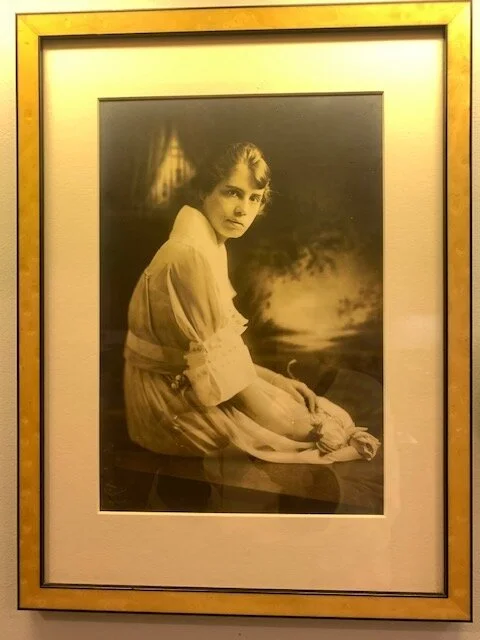
They were grand ladies, Ellen and Lavinia … Ellen was from Irish stock in New Jersey, well monied, and she had the most beautiful heart shaped faced and deep brown eyes. She married two men, one who was a ne’er-do-well with no vision of success, and the other a publishing magnate. She was a woman who seemed to be blessed with good fortune, materially that is. She had two sets of children, my mother and her sister Pucky from the charming neer-do- well, and a sister and brother from the the publishing giant. Her children were tended by a succession of governesses. What did I learn in her house on Long Island? That cocktail hour always preceded lunch and dinner, that children at the table needed to “be seen and not heard,” that summer thunderstorms on Long Island were ferocious, that all the women in the family seemed to smoke cigarettes, and that the Christmas tree in winter was the grandest, most sparkling and fragrant tree ever. As a child I wandered through what we called the “big house” and often ended up in the kitchen to see what the cook was working on, I watched my grandmother play bridge with her lady friends, sometimes I played croquet with my handsome uncle Nelson, and I pretty much stayed in my own little lonely bubble.

Lavinia was an elder of a different sort altogether. She had been raised by a doting father in Charleston, South Carolina, in the absence of a mother who died when she was a baby, and she managed to raise two sons in the traditional and formal East Coast way - my authoritarian grandfather dispensing the discipline and my grandmother tending to the needs of the household. She and my grandfather moved from the East Coast to San Francisco, and she looked forward to welcoming our family into her lovely house. She was longing for familial love again, and I was her perfect subject. Her glorious grey house on a steep San Francisco hill was home to beautiful French antiques, formal family portraits, gold Japanese screens, and a baby grand piano; from the age of about seven, I grew up in this house and came to find my place as an adored child, a far cry from my time with my New York grandmother. Grandmother Dimond taught me table manners, lovingkindness, dominos, classical music, the joys of travel and adventure (she had always been an adventurer), and reading together at night before falling off to sleep to the sound of moaning foghorns. I was the daughter she never had, and she loved me with all her heart. I think it’s safe to say that my eventual reverence for the elders of the world was a result of spending all those young years in her company.

I grew up with a feeling of familiarity with the old people, those ladies who formed my grandmother’s social circle, didn’t see them as separate from myself; I found them all pretty interesting, wispy gray hair and all.

To this day I have warm memories of sitting around her dark Chinese coffee table listening to their stories of family, the various and sundry ailments, their social and political concerns, even their complaints about retired husbands!

I am an elder myself now and I spend a lot of time considering just what it all means. What place do I have in the larger world? It helps me to look back on these grandmothers to begin to understand it all. It would seem that elders have the luxury of pontificating, teaching, guiding, and indulging their own whims. They have a certain command of people’s attention — just like my grandmother Dimond always did - because of their stature as elders. I see that now when I gather my grandchildren around the table for a meal and nudge them to listen to what I think is an important story containing some profound human truth, like impermanence for instance. Do their eyes glaze over? Sometimes. But do they take this wisdom with them? That is the important question. Which gets me to perhaps the most obvious characteristic of elder hood: wisdom. If one has lived seventy years or more one has undoubtedly amassed a significant amount of insight and experience, and thus has perhaps some important, maybe profound (?) things to say. The key is when to say it and how. When I came upon the Buddha’s teaching about Right Speech in my fifties — speaking what is true, timely, and kind — I found a new way to impart wisdom, to get my family to listen to me. When I’m filled the urge to let the grandchildren know something important, I take a pause often to see if it is “timely,” and my intention is positive … so there’s a chance they’ll actually hear what I have to say. I have always been a word person, I love words dearly, and of course love casting them about. But we must be careful with words, for they are powerful things when we have a captive audience … and there’s a time and place for everything, right?

Being an elder has its more shadowy side, too.

I’m thinking of invisibility and frailty. We live in the 21st century in America and our elders are often marginalized and forgotten in favor of youth with all its trappings: electronic gadgets, fit bits, state of the art diets, and metaphysical self-help gurus. This is hard. I walk the city streets feeling somewhat invisible, as I did when I was a child around my mother, and I wonder if my grandmother Dimond or Doubleday ever felt they moved in the shadows as elder women. And did they ever become consumed by the seemingly never-ending physical frailties that take over their old bodies? Looking back, it doesn’t seem so to me. They seemed so dominant, self possessed, and assured of their position. When grandmother Dimond went blind from macular degeneration in her eighties, I saw great anger flare in her briefly as she began to adjust to a sightless, confined life, but then it soon passed, and she moved gracefully into that dark world with all the good will she could muster. Grandmother Ellen had hip problems and a chronic smoker’s cough, but she didn’t seem to let these things get in her way…. at least for a while. These two women didn’t lead what I would call “exterior” lives the way I now do. They weren’t out on the street a lot, walking the dog, going to restaurants, getting on airplanes and trains, observing all the while how they were being causally and consistently overlooked. They had their glorious homes, complete with housekeepers who tended to their needs, and their landscape didn’t expand very much as they aged and their bodies slowed down. Or maybe they saw the limitations of their old age and chose not to admit it to anyone. After all, they both came from a time when women were trained to keep their mouths shut and bear their burdens politely and quietly.

I just lost an elder in my life last week: my aunt Pucky, my mother’s ornery, brilliant sister who had the tenacity and stubbornness to survive until the age of 94. The product of great wealth and privilege, she had a difficult and lonely life. She was an alcoholic who gave up drinking at a young age, a clever writer trying like crazy to make a go of theater writing in New York, and the least beautiful daughter of the matriarch Ellen McCarter. Her success was limited though she was surrounded by brilliant creative artists all of her adult life. She never seemed to make a go of relationships with men, and as she grew into middle age she created a loving partnership with a woman artist who then shared those elder years with her. She was mean spirited and funny, and she had a huge influence on me despite our prickly relationship. She turned her back on my mother when she was desperately sick with alcoholism and I had a hard time forgiving her for that … but of course, of course, I did. What my aunt Pucky taught me through her life and her words was that the path of a writer was a worthy, exciting, and compelling thing, and that if one had the talent — and she always thought that I did - one had the responsibility to forge ahead and do the work, speak the truth to the world. She didn’t always speak the truth the way she would have liked, but she admired those who did. She once told me I had “emotional honesty,” that I had the guts to speak what was real, and that meant everything to me. I kept those words of hers close to my heart and they fed me as I struggled to complete Bowing to Elephant about five years ago. I was proud to be able to share my book with her just a year ago on a New York visit; she and I sat for hours in her lovely bright apartment and shared stories of family, writing, the state of the world, and we celebrated the resurrection of our relationship.

I’m approaching another milestone of sorts: 75. Why is that a milestone? I think of 1775 and the birth of our fragile democracy… I think of 3/4 of a century …. Milestone or no, it is an achievement, as was the ninety-four years that my aunt journeyed through her life. Achievement, yes! That’s another trait of elderhood, isn’t it?

By virtue of the years of inhabiting our imperfect bodies and meeting life’s challenges, we achieve certain things; wisdom, crankiness, humor, deep understanding of impermanence, oneness with all, heartfelt care for others, more crankiness, melancholy, and then perhaps more laughter and humor.

You must have humor, aunt Pucky always said…. You might as well have humor, I say, because as a wise character (played by Lionel Barrymore) said in an upliftingFrank Capra comedy from the 30’s, “you can’t take it with you!”