Intentions for a New Year

Ok… so this is a perhaps overused topic … and I am choosing it nevertheless because all the other subjects that arise in my mind these days — loneliness in winter, mortality and vulnerability, fear of the unknown, our harsh and cruel social/political landscape — seem too weighty and sad. I have been traveling through what feels like difficult territory lately, complete with post book publication “blues,” health concerns, and despair at our culture’s polarization and animosity, and I would frankly rather talk about what I see as possible in this moment. That is all we have, after all. So, I offer you some of my deeply felt intentions that call to me now, “resolutions” that seem to be workable as I look at the path ahead…. I hope you hear their call as well.

  • to treat my aging body with kindness for just moments each day

  • to give something of myself to the world each day … could be a smile to a stranger, a tutoring session for some junior high kids, or playing the piano

  • to spend a little time each day reading something I love

  • to bring to mind each day of one of the “resources” in my life - those elements (people, animals, places) that afford comfort and safety in our perilous world

  • to remind myself not to believe everything my mind tells me

  • to be generous - to myself and at least one other person

This body we inhabit, which is NOT who we are, is a precious and imperfect thing that asks to be tended with care. It carries us through life with its many bumps in the road. Frailties, sickness, and handicaps of all sorts… We can help it grow and thrive by bringing our loving attention to its various parts, like the sore legs, aching shoulders, fluttering heart, and cranky stomach…. This unfolds in mindfulness practice as we send kindness to whatever part of ourselves is struggling. Love does heal, after all.

In this fragmented world we often feel alone and separated from our fellow beings. Living in the city most of the time, I’m acutely aware of this, and I often try to reach outside myself and offer something of value, creating a sense of connection with my fellow humans. My favorite thing to do is to smile randomly at people I see as I walk the city streets. Also, when I consciously apply my skills and goodwill to work in service to others, I discover that I’m closer to being an integral part of the human race! And finally, playing the piano … sending music out into the air … feels like I’m offering my blessing to the world. While it looks quite private, it is in fact giving something beautiful and changing life’s energy outside myself.

I’ve recently found refuge in reading in the evening before I turn out my light. A thoughtful biography of one of my favorite writers, Henry James, and Alexander Hamilton, the great tome which inspired the astonishing musical play, and Homer’s Odyssey, are recent choices. These books are generous and abundantly intelligent, they feed my mind and heart, and inspire me to continue pursuing my writing, a “career” now somewhat dormant because I’m promoting my recently published memoir. Good books, whether they be novels of romance, volumes of history, of poetry, or a unique memoir, are good for the human soul. They make us bigger and better people.

“Resources” are those people and places which afford us a sense of being o.k., of being safe and secure. I learned this from a wise somatic therapist who shared what she understood of the “window of tolerance,” that zone humans need to occupy if we’re going to live with and recover from from traumatic and terrifying situations. Humans always function better when they feel safe. During these confusing and scary times, I find these resources: my dog Peaches, my cat Jackson, my grandmother’s baby grand piano, my meditation practice, the roaring Pacific Ocean, my grandchildren, knitting a scarf, my Buddha statues, cooking a lovely roast chicken, just to mention a few …. My intention is to remind myself each day of at least one of these resources, to bring it back into my heart and feel calm and secure.

Our brains are tricky organisms - they do so much for us: allow us to learn amazing things and often to stay out of harm’s way. They help us to imagine the unimaginable, solve incredible problems, dream great dreams, and create beauty from nothing. They also tell us terrifying and unhelpful things: that we’re unloved, unappreciated, we’re on the verge of certain fatal death or failure, our bodies are no good, we’ll never measure up to the dreams we have for ourselves, the chaos of our modern world is more than any of us can possible cope with, we’ll soon be forgotten and our lives will become meaningless…. You get the idea. Bad - untrue- stuff. I thought I had a difficult time with the “inner critic” when I wrote my book — and now I see more of this carping, unkind judge hovering over me as I navigate some disappointments, human frailties, and the like. I attempt to face this head on and see it for what it is - untruth, the mind fabricating angst because it is obsessive and needs to keep working at something. Can we just all agree that the next time our brain says “no” to our dreams or our heart, we counter that with a “thank you for your opinion, but I’m kind of busy living my life right now”?

I love generosity. My grandmother taught me a lot about giving, and I try to practice this on a daily basis. It can look very simple - giving sincere thanks to anyone who helps us - or more involved, like finding a way to make a significant difference for someone we care about... Or how about offering our own bounty to those less fortunate? Random giving of gifts is always a pleasure, I find. Listening carefully and lovingly to someone can do the job too. Generosity has many faces. Think about choosing it once a day, even in the quietest of ways.

Our lives are ours to build on each day. Let’s not drift, but pay close attention and make it all mean something.
Mag Dimond
Thankful

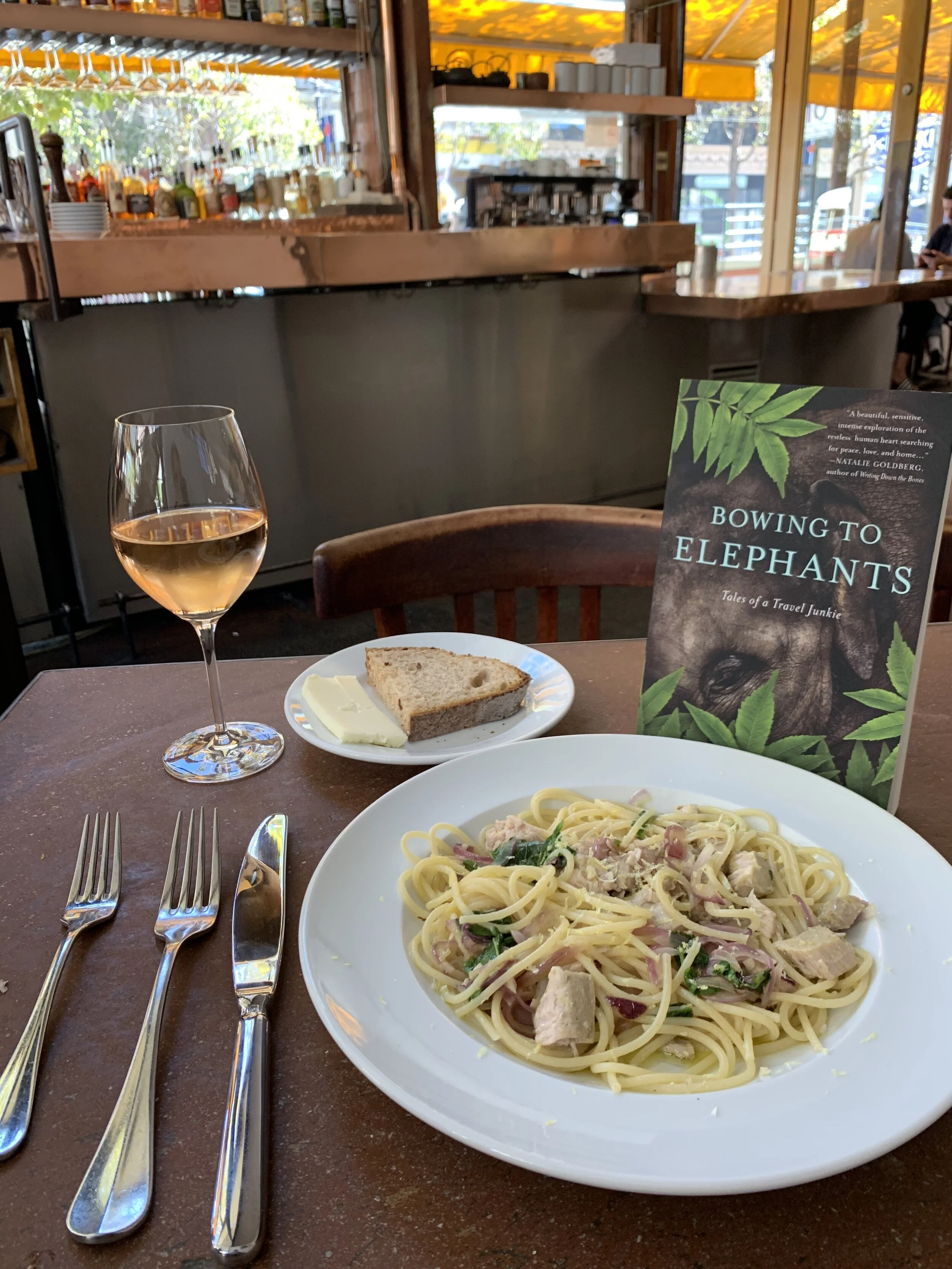
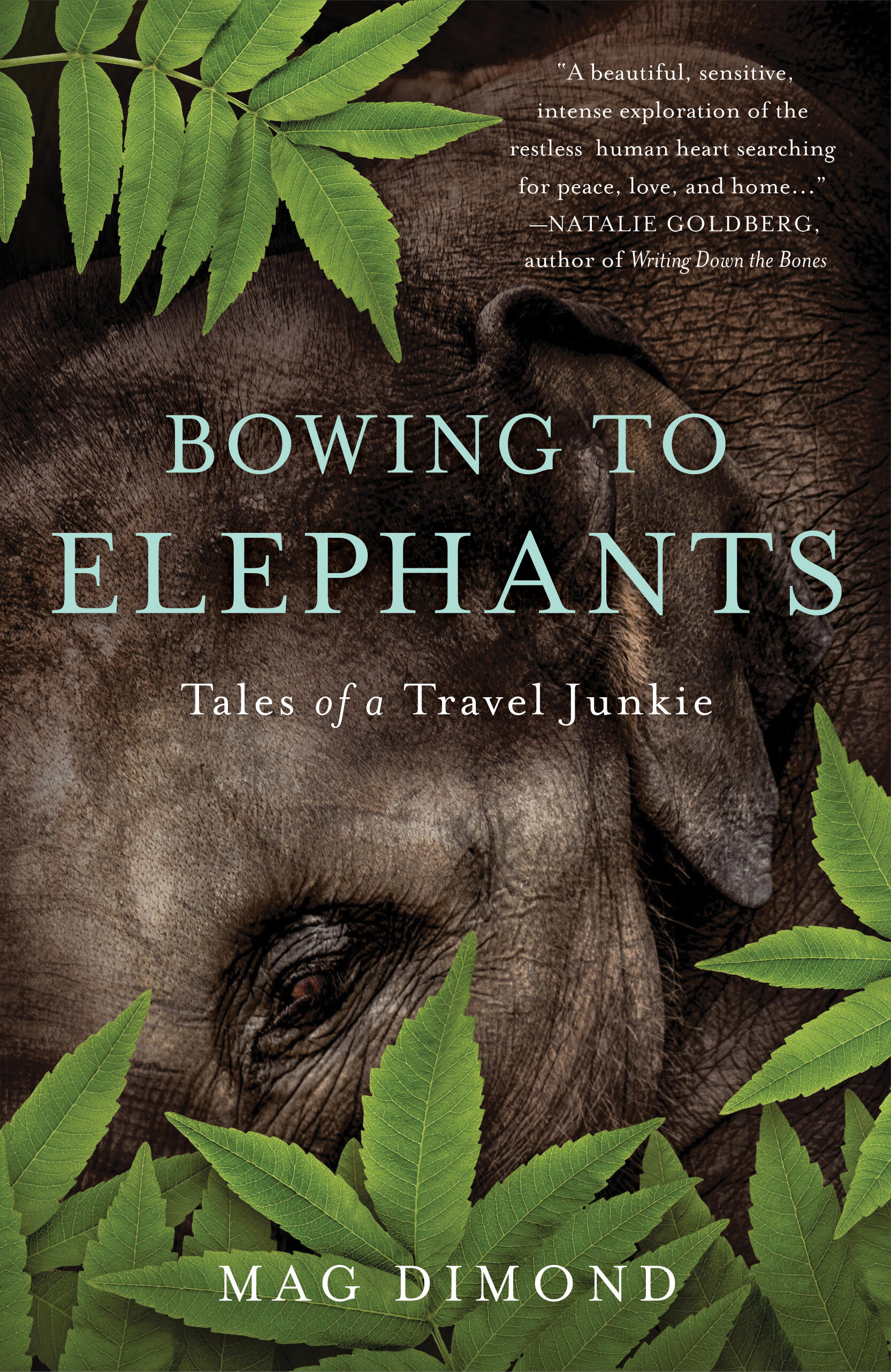
What am I grateful for on this eve of Thanksgiving? There is almost too much to think of .... My amazing and tragic mother who brought me into the world ... my grandmother who nurtured my heart and mind ... and ultimately my own children and grandchildren who taught me about family. And then there's the indomitable spirit that burned inside me to explore the world, to teach, and finally to write my story. In between we have cats and dogs and the Pacific Ocean, my grandmother's piano, my Buddhist practice, more travel, my beautiful circle of friends, delighting a great food and wine, the astonishing city of San Francisco that I call home... When it gets hard growing old (and it does!), I must pause and remember all these beings, these places and experiences. Finally I am grateful to all of you who have picked up Bowing to Elephants and read it and loved it... please share this special book, write about it online if you feel so moved! Every little thing counts, you know.

What an amazing adventure life is, after all: you get to discover your deep truths and share them with the world, spread them far and wide, and hope fervently that these truths can change the world for the better!

Mag Dimond
Jamie's Muse by Bonnie Lee Black; A Reflection

When I was a community college teacher in northern New Mexico I discovered a deep and sad truth in my students: they frequently felt they had no story to tell, nothing worthy to describe… and because they felt that way they were afraid and felt invisible. Afraid of being who they were. One young woman shared with me that she wanted to write about a grandmother figure in her extended family, but her husband admonished her against it. He told her that she didn’t have a right to tell the stories from the past - that in effect she didn’t have a story of her own. I remember feeling heartbroken for her because she thought she needed to stay in the shadows and not tell the story that was important to her, so I encouraged her to forge ahead and write from her heart, her imagination, and her experience. Happily she did this … wrote a piece she was proud of.

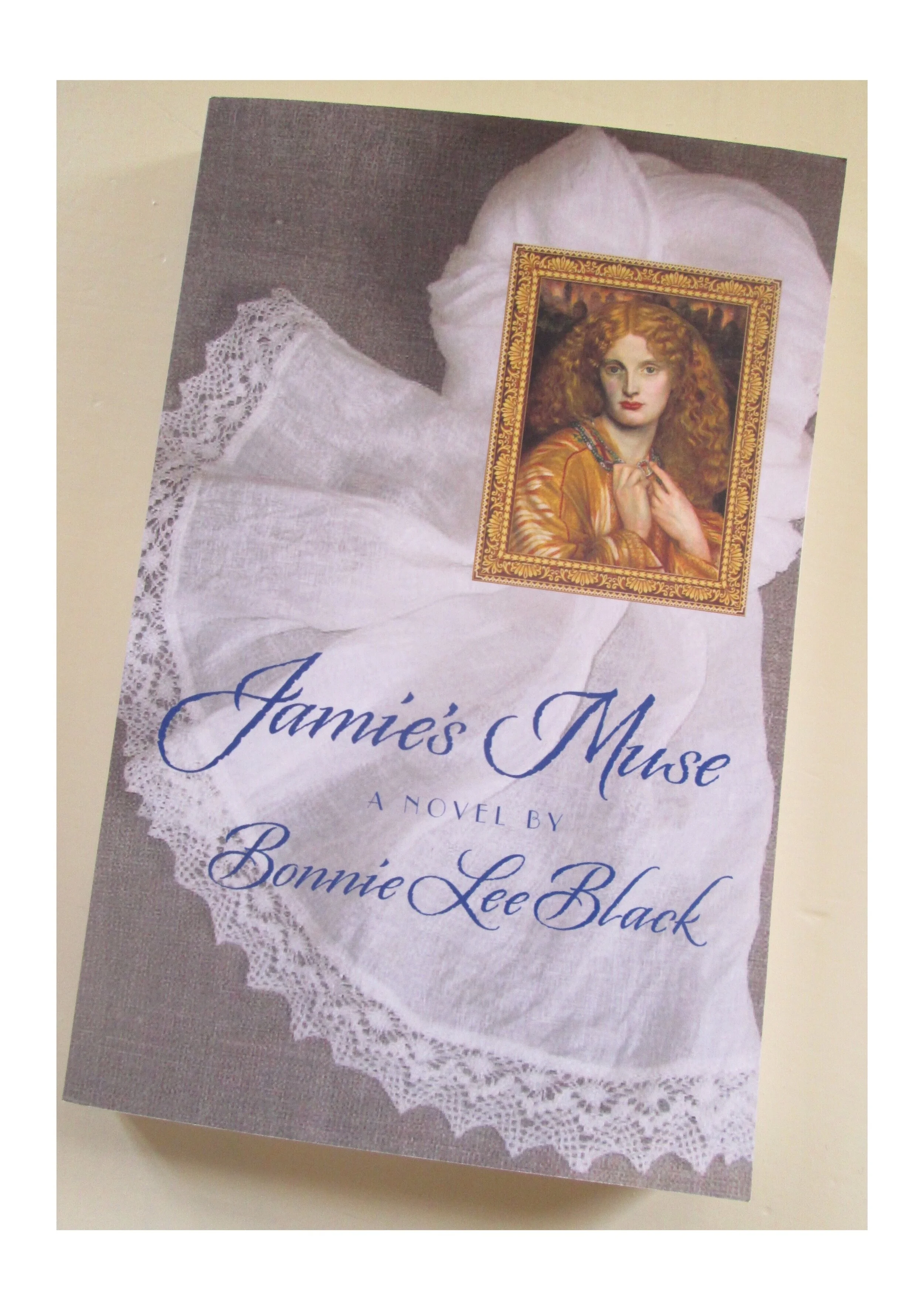
All of us, whether we are writers or not, walk through life with our various unformed stories stored inside us, and characters in our history that beg to be recognized. I want to applaud author Bonnie Lee Black for acting upon her dream of unearthing her great grandmother’s story, and with much time and research bringing that story to light so that this unique woman in her past could become visible after all. Her book is called Jamie’s Muse and it was published by Nighthawk Press in 2018. It is a compelling blend of history and invention which reaches back over generations to create an intimate narrative for the undocumented Helen Black from Scotland whose life story seemed to have been erased.

The book’s heroine, Helen, grew up in Kirriemuir, Scotland, fell in love with a creative young man called Will whom she married and subsequently followed to Africa. Black paints a picture of a sparky and strong willed young woman (her great-grandmother) who was also loved from afar by the elusive J. M. Barrie, who later became the renowned author of Peter Pan. Helen took a pretty big leap of faith and agreed to follow her young husband to South Africa when he took a job with the Natal Government Railways. The novel takes us on quite a journey, moving from Scotland to Natal, to Taos, New Mexico, (Bonnie’s former home), back to Scotland and England, and ultimately to America. A steadfast love becomes clear early on in some of the love letters written by newly married Will as he awaits his young wife in Africa. From Will’s last letter to his wife: “Soon I will see your lovely face again, hold you in my arms, bask in your glow, and drink in the dulcet sound of your voice and the fragrance of your skin and hair. My heart races at the thought of embracing you again!” Such sweetness. This couple’s reunion and beginning of their new life is sadly short-lived… There is a fire and an untimely death, followed by the adoption of their young son by the local Zulu tribe. We ultimately follow the young boy, John, when he is transported back to Britain by those who think they know best — away from the only “home” he has known with his Zulu family

Africa is a land that Bonnie Black knows well. She worked and lived there earlier in her life (Peace Corps, Gabon, and later Mali), and has published`two books about her experiences, How to Eat a Crocodile, and How to Make an African Quilt (You can discover more about Bonnie and sign on for her wonderful blog “WOW” by going to www.bonnieleeblack.com).. She offers us a close up portrait of the humble and proud Zulu people in this book. Here she describes the presentation of the little white baby who was rescued by a Zulu woman, Amma, when young Helen and her husband died: “The chief raised his bracelet arm to signal silence. He had allowed his brightest daughter, Amma, to work for the ghost-people because he’d wanted her to learn their language and tell him of their mysterious ways. Why were so many coming to his land? What did they want? What were they willing to give in exchange? Now this. The ghost baby in Amma’s arms began to cry a hungry cry. Amma put her thumb in the baby’s mouth to quiet him …… ‘Father, she said, ‘the baby is here now. Great-Great has brought him to us. We can care for him until we are shown another plan.” Black places us in the midst of the tribe’s struggle with the terrifying responsibility of protecting an orphaned white child. The boy grows in their care but ultimately conditions change for him. Bonnie Black’s skill at rendering place, cultural traditions, and deep emotions (compassion for the young “Tande”, otherwise known as “John”) shines in this particular section of her book.

In this haunting narrative we accompany the author on her journey to bring a meaningful and vibrant life to her great grandmother, watching as she strips away mystery and reveals a multi-faceted love story: Helen’s love for Will, Jamie’s distant love for Helen, Will’s newly discovered love of painting and his new home in Africa, the Zulu’s love for the blond headed boy, and yes, Black’s own love for her romantic, adventuring great grandmother. It’s also about love of the land, whether that be the vastly different landscapes of Scotland or Natal, or finally, finally …. America where young John ultimately traveled to discover his own home.

I love that this story has all the twists and turns as we navigate through a landscape of historical record and the creative imaginings of the writer; we follow her around those turns but never get lost. I have long believed that really good stories are not necessarily linear sagas complete with traditional climaxes and resolutions, but rather an intersecting of mosaic pieces that come together over time to form a rich picture that is in fact a melding of “truth” and fiction. Bonnie Lee Black’s book feels like such a mosaic and it reminds me that we can mine the various mysteries that are present in our lives and fashion authentic, moving, and layered narratives to share with the world.

My thanks to Bonnie for reminding me what is possible in storytelling.

Mag Dimond
Food = Love

A few nights ago I created a pasta for myself that combined magical elements of chick peas, cream, garlic, rosemary, and of course a LOT of Parmesan cheese. When I feasted on the dish I realized that standing at the stove and creating something beautiful and tasty to eat is indeed an ancient habit of mine. I stand there and make food for myself even when I don’t feel well, or I’m upset or anxious … I stand there and do this because it makes me feel safe and comforted. Offering food to oneself is an act of generosity and of affirmation.

Of course, there’s a backstory to this, and it goes back to being a little girl living alone with my mother and being fed TV dinners at night when she left the house to be with her friends. My mother had flirted with Italian cooking early on, but soon grew bored as her social life picked up. A newly divorced woman now interested in what her fellow artists could offer, she chose to give me Swanson TV dinners most evenings before leaving to pursue her new life.

This Swanson TV dinner looked a little like food but it wasn’t. There were three compartments in an aluminum tray, one containing the meat (turkey, steak, chicken), and in other other two watery vegetables (sad peas or carrots) and some sort of starch (potato, rice). It was a singularly ungenerous and soulless offering, but I ate the stuff anyway because I was hungry and hadn’t yet figured out how to create something good for myself.

I hid Three Musketeer candy bars in my desk drawer for later as some reward for the sadness and boredom, and I let the night unfold as I read a Nancy Drew mystery or did homework. I was about nine years old.

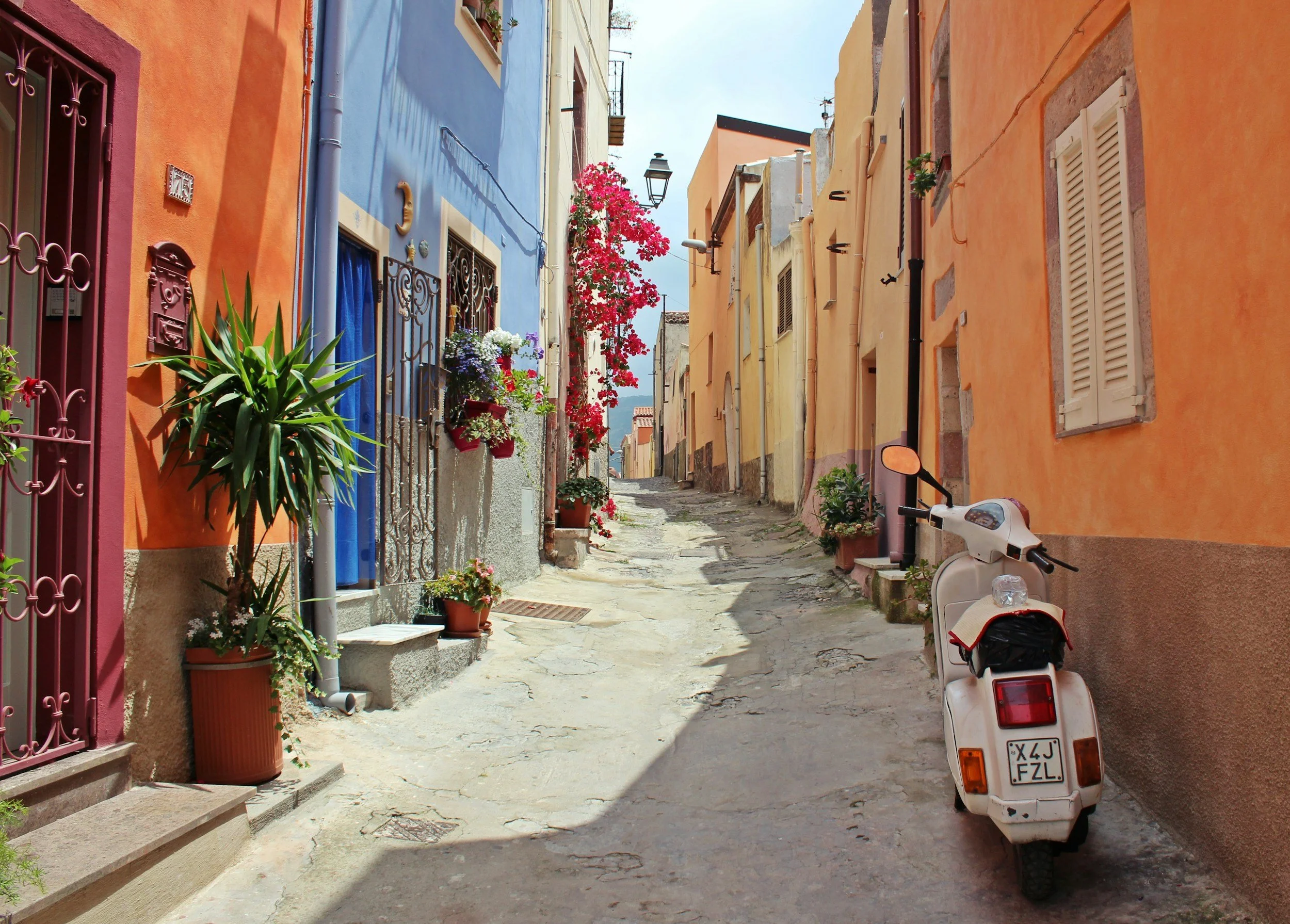
When we went to live in Italy everything changed because we found ourselves in a country of beautiful food and the joyous ritual of food preparation.

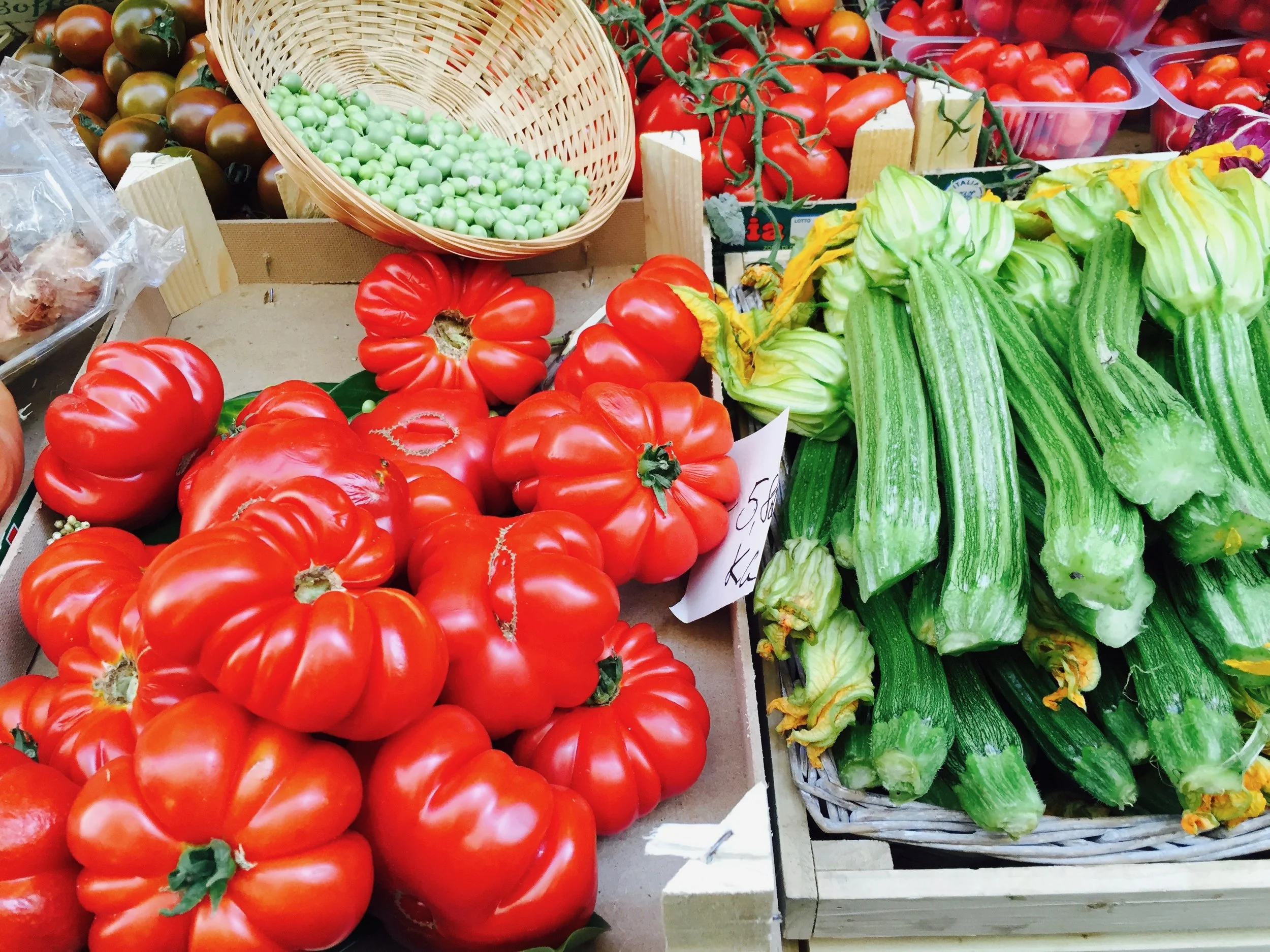
Our resident housekeeper Elda whipped up dishes that captured our sensibilities. It was simple- a pasta with butter, oil, and tons of garlic - it was beautiful - brilliant green zucchinis or baby artichokes in olive oil - it was completely nourishing - roast chicken with rosemary - and it caused us to feel peaceful and content.

I spent many afternoons watching her prepare mayonnaise, bolognese, eggplant parmigiana, and perky green salads, and I was hooked. I wanted to understand how to do this - how to take the simple ingredients and make them into beautiful comforting meals. In Italy, as in France and other Latin countries, the preparing of meals was taken very seriously and was like the unfolding of opera. I loved that and never forgot it.

Living in Italy for three years changed all that I thought and felt about food. And as a young married woman I threw myself into the creating and the performing, and especially all the eating! I never took my children to McDonalds or Taco Bell, I fed them healthy sandwiches with alfalfa sprouts, and I never bought frozen or canned food.

I figured out how to make a steak dinner really elegant by adding asparagus with hollandaise, how to make Coq au Vin magical by using a high quality red wine, or how to turn a simple cheese soufflé into something more complex than just a cheese soufflé. I made our family’s Sunday brunches special with my omelettes oozing Brie, smoked salmon and green onion.

And my piece de resistance was my Caesar salad made from scratch. When I wanted to feel really proud of myself I made a Caesar and everyone smiled with pleasure! I did everything artfully except desserts, and somehow I was forgiven for that (perhaps because I did bake brownies endlessly for school bake sales!). In my mind the palette was endless, and I just kept on playing with it.

I often threw dinners for 20 friends in my small redwood house, experimenting with learning tempura batter or throwing pasta against the wall to see if it was “al dente,” and I felt a lovely warm pride in what I created. Offering food to people you love is intimate, and it is a great joy - it’s about connection, adventure, and comfort. When our bellies are full of pasta carbonara and Caesar salad, we are inevitably content to our core. And when we’re content we feel safe.

I had recurring romantic dreams of being a restauranteur because I knew I was good at the creative part, but happily was discouraged from that path by a few people who knew the hardships and strain of making that kind of business succeed. I was relieved when I realized I wasn’t going to take that plunge into business because it meant that in the end I could continue to prepare beautiful food for close friends and for myself… and so I did … and so I do.

Back now to the kitchen on White Street in San Francisco with an elder lady whipping up yet a new take on pasta in her lovely art filled kitchen…. I am standing here still with the energy and interest to do this because I know my efforts will make me feel happy when I sit down to eat what I’ve made.

In fact, I have a feeling that that my longevity so far is related to my compulsion to go to the stove and make a great risotto, grilled sea bass with rosemary, beautiful green Romano beans with garlic and tomato … I’m seventy-four and I still love rattling those pots and pans because I must be generous to myself, I must give myself something beautiful, nourishing, and comforting. It would seem that I’ve learned how to care for myself very well in this way.

I believe that food symbolizes love for this old lady who remembers all too well what it was like to eat desiccated lifeless food on an aluminum tray alone in her dark bedroom all those years ago. Food = love = comfort = joy.


In Bowing to Elephants I offer a recipe from that remarkable time in Florence when I was 11, standing in the kitchen witnessing Elda’s magic as she prepared our meal. I learned about Pasta Carbonara then, and it is the first food idea I took with me into my adult life; it is still with me: a down-home, simple comfort food that involves just pasta, eggs, bacon, butter, and cheese…. I invite you to get the book (if you haven’t), find this recipe, and cook up some yummy peasant food for yourself and your loved ones.

• • •

I invite you to get your copy of

BOWING TO ELEPHANTS
Tales of a Travel Junkie

(print or digital)
at the any of these outlets:

• Your local bookseller
via IndieBound
(my preference)

• Powell’s

• Barnes & Noble

Amazon

Mag Dimond
Growing Up in a Family of Dissemblers

My grandmother, my mother’s mother, had a favorite phrase she used to deliver with some urgency to convince me of certain rules of conduct the younger generation needed to adhere to.  There were what she called “cardinal rules” that I must always obey.  

There were some cardinal rules about not interrupting your elders, not leaving the table early, about wearing proper clothes in the evening, not talking about politics, and pretending you were interested in everything your elders said to you.   

This “decorum” that was so vital to her consisted of these superficial do’s and don’ts, and then there were other cardinal rules, such as never sharing unattractive information about anyone in the family, never admitting that someone was unfaithful, silly, cruel, unscrupulous, or a drunk.  What darkness lay under the surface needed to remain there.  This last was quite important.   

In a family where three generations were certifiable alcoholics, no one ever mentioned the word nor the terrible consequences of the behavior. So, it would seem that a significant “cardinal rule” in this system was that one must conceal truth whenever it was unattractive.  

I grew up wondering about so many people I sat at the dinner table with, either artist friends of my mother’s with strange behavior or various aunts and cousins who flocked to my grandmother’s dining table.  

I wondered about why all those people smoked and drank so much, talked about superficial things, and then disappeared… I knew better than to ask about cousin Carlos or “big” Nelson or mom’s artist friend, Phil Roeber.  And so, martinis and scotches were drunk to excess before dinner, followed by wine and more wine, and brandies and cigarettes, and the talk danced always on the surface as I watched and listened and watched and waited…

The adults who perfect this dissembling and fabrication never seem to understand that the child in their midst is inherently smart and perceptive and sees a number of things they don’t.  They tell the child to “be seen and not heard” and this young person then becomes a voiceless witness to dark and painful truths.  

This dishonesty is deeply harmful and heartbreaking because it makes a young person invisible and insignificant.  And down the road, as this young son or daughter struggles to figure out just who they are and how they can like and care for themselves, another dark fallout from this life emerges: dark anger at the neglect and the selfishness.  

And with this rage may come some destructive habits and a possible repeating of the pattern.  There is no denying that causing harm perpetrates more harm down the road.  Call it karma, call it cause and effect…  Our actions in this life are enormously important.  

I had the great fortune of having a loving grandmother (not the one who invented those “cardinal rules”) who was able to see and cherish who I was and inspire me to learn as much as I could.  I was fortified by this love and support throughout those young years of turmoil perpetrated by my mother’s narcissism.  

When I came out of my thirties (which unfortunately included some seriously misguided choices), I embarked on my travel odyssey that still continues to find human connection in distant places and to discover who I was.  Ultimately, I became a citizen of the world and I found compassion and insight through Buddhist practice.  I was fortunate indeed.


An eight year old girl faces the dissolution of her family:

“Frozen in that moment of composure and skewed logic, I knew my mother had not told me the truth, and I wanted to believe it was because she just didn’t know how.  Nobody every taught her to… Was this all happening because she just didn’t see me, or because speaking the truth was too frightening?  Or both?  In the end it didn’t really matter, for soon I would simply become the invisible child she was stuck with, the little girl who sat quietly through long dinners waiting for her chance to speak and be heard, trying to decipher the people around her so she could learn how to fit in.  From here on, my mother and I would be uncomfortably bound to one another.  I was an unavoidable player in her life, and my path as witness of my life and carrier of fragile memory was set.”


That young girl (now woman) looks back at life with her mother:

“From the time I was a little girl, I had watched my mother consume inhuman amounts of alcohol, but it was a long time before I could admit to myself that she was slowly killing herself.  As she aged, she consistently ignored all medical warnings that came to her, changing doctors as often as she was given ominous news.  A lot of years dragged on – the liver is a mighty and stubborn organ – but as she became paler, her stomach more bloated, her eyes showed me her fear of dying, all wide and nervous and bloodshot.  The liver had begun to rot, now beyond rescuing, and soon there would be no more martinis or brandies or cigarettes.  No more.”


My book, Bowing to Elephants, may never have been written if it hadn’t been for the desperate need to discover and tell the truth that was born from my childhood loneliness.  As sad as the early years were, I had a hero or two in my life, and that coupled with my indomitable will to survive, kept me on the path of seeking what was real and good about people – all of them.  I am grateful for this painful and beautiful journey…


Mag Dimond
Finding Friendship in the Himalayas

I have always maintained - as does travel writer Paul Theroux - that traveling allows us to discover who we are.  I’d like to expand that assertion to say that traveling takes us across borders, over bridges, and through doorways, so that we may discover we’re part of the larger human family.   Whether we go to Paris, Cambodia, Cuba or Africa, we experience community with others who often have different traditions, beliefs, not to mention skin color. As we melt into these different cultures we see just how unreal the cultural divisions (stereotypes, biases) we’ve been conditioned by are. During this fraught and painful time in our human history, with so much at stake worldwide, this discovery of commonality and oneness is not only healthy but necessary for our collective survival.  We need to look beyond our own boundaries...


I am thinking in particular now of a young man I met and became close to in Bhutan many years ago whose name is Karma.  From the moment he put the white kata scarf around my neck at the airport through the last afternoon when we witnessed a private family cremation together, he offered me friendship, teaching, and laughter.   Over the 8 days, we explored the mountainous terrain in a car driven by a good friend, reaching one of Bhutan’s tallest mountain passes on our way to picnic in the Haa valley, spent the night in a tiny out of the way village where the power went off in the night and plunged us into deepest blackness, visited the capital city of Thimphu with its little museums, and of course walked through monastery after monastery close to our home base of Paro.   I remember Karma and his friend chattering in Bhutanese as we ascended and descended, and I inhaled the pungent pine and cedar from the surrounding forests and took many deep breaths to keep from feeling carsick.  He and I talked some of Bhutan’s way of life - a dramatically different one from our own  - and ultimately explored more personal subjects that came up:  leading the spiritual life, love of the Dalai Lama, the spiciness of Bhutanese curry, single older women who wish to be independent when they travel, our shared yearnings to learn more of the world outside our country‘s  boundaries, the surreal mythology of Bhutan, and even the mysterious old man sleeping outside the Kichyu monastery... The more we talked the more we were able to see one another.


From my recently published memoir, Bowing to Elephants:

“Karma admitted that he was curious about why a single older woman like me was traveling all alone to his country. ‘I’ve become way too independent and stubborn to enjoy being herded about in groups like so many sheep,’ I told him. ‘I tend to be interested in unpredictable and unusual things. I like to make discoveries spontaneously as I go along.’ 

He smiled at me as though he understood. He had a small, round brown face with alert dark eyes, and his gaze was open and clear as he spoke wistfully of the time when he gave up on the monastic path as a youth because of its intense discipline. He was coming of age now in a time when tourism in Bhutan was flourishing, and people from the West were arriving in great numbers with wide-eyed curiosity; he confessed he wanted some day to travel beyond his protected land, and it was clear that working with those who came to visit would help him do that. ..

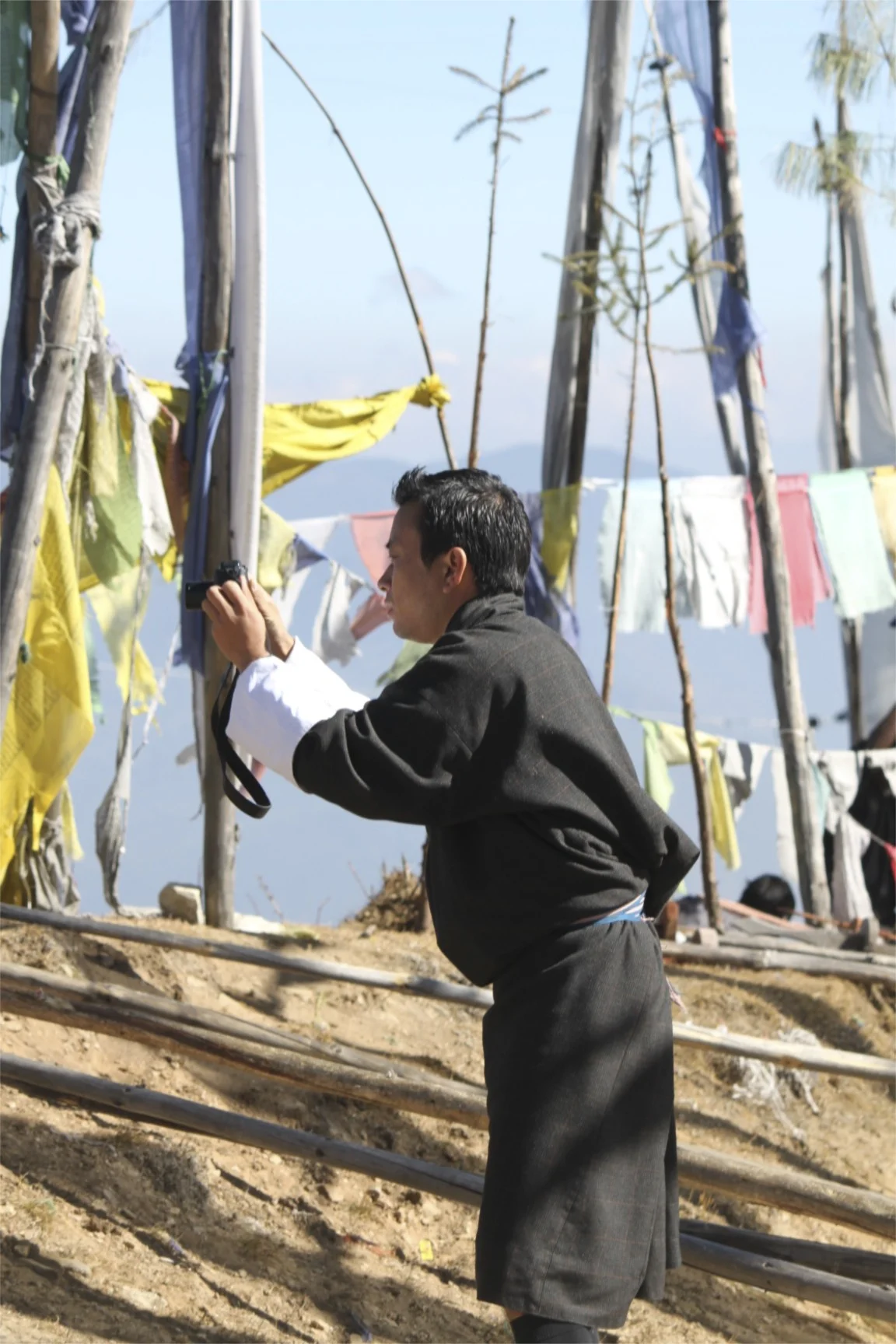
He looked so smart and capable in his traditional black kilt and sturdy hiking boots with sensible thick socks. Ready for hiking. I reminded him that I wasn’t in Bhutan to hike the mountain trails like most of today’s tourists, I was by no means a trekker. I wanted to see Buddhist life up close, to go to monasteries and inhale the incense, bow before the shrines and the flags, and continue to ask all my questions. As he watched me struggle to frame a photo of the town below us, he told me photography was a serious hobby of his, and he loved taking pictures, so I offered him my spare Canon and said, “please do.” In the late afternoon as the sun sank behind the giant mountains, we stood quietly as the pine trees whispered in the November breeze, and it seemed we were looking then at one another’s faces with unexpected familiarity.”


I flew away from Bhutan over the stunning Himalayas and brilliant blue skies a changed person.  Karma had brought me into his culture (monasteries, restaurants, prayer flag fields, artist studios, cremation grounds) and made me feel at home.  Thousands and thousands of miles from home, I was never lonely or afraid.  Over these days I became aware of the powerful ethic of practice and devotion in this country…. And the happiness that seemed to naturally radiate from most of the citizens.  This was a world without policemen or guns or excessive technology. Karma and I trained our cameras on all of that and more, and when I returned to America I sent him his own little Canon.  Through the years since that idyllic week we have communicated back and forth faithfully.  He is now a really good artist as well as a travel guide and seems happy in his beautiful “Land of Gross National Happiness.”  I am now a published writer as well as a traveler and matriarch, and I am finding my way in our country of discord and chaos.  


Have you ever wondered what it would be like to find a new friend somewhere totally unexpected?  Could be Mexico, India, or Vietnam, or Italy … anyplace. It is possible:  you just have to keep your heart open and your mind curious and engaged. And remember that we’re all in the same family in this life.


Dear followers:  if this peaks your curiosity, and you haven’t yet bought Bowing to Elephants, please consider taking that leap.  IndieBound.com will direct you to the closest independent bookstore. 

With gratitude,

Mag


Mag Dimond