Bowing to Elephants ... & Leonardo da Vinci?

The reason it has been quiet in blog-land is that I have been turning my attention inward to learn a new skill: making my book and myself known to the world. In plain English that’s called publicity! I have been digging deep to understand Bowing to Elephant's gifts to the reading public and I have to say the efforts have paid off. Looking back three years ago to the time when I held a finished manuscript in my hands for the first time, I thought to myself that the memoir was “intimate,” a quiet little book that would appeal to a modest audience. With the support of a few people who will go unnamed, I have come to feel differently. It turns out that my story of traveling the world and navigating the pain of my childhood has broad and universal themes: suffering and forgiveness, abandonment and self discovery, letting go of past narratives and finding freedom in spiritual practice, finding communion with fellow beings, and seeing that love in the end is our ultimate refuge. What I hadn’t thought about earlier was that our world has been (and is) a deeply suffering place where most humans are craving relief, freedom from pain, community, wisdom, and insights about leading conscious, good lives.

Bowing to Elephants explores all of the above. While being deadly serious, it is also a colorful and sensuous portrait of the building of a full life from a place of abiding hunger and deep curiosity. What follows is a brief and thoughtful summary of the book. I want those of you who have been following my blog over time to see this now so you may perhaps be inspired, share some of these words, and help this book find the broad audience it deserves! Important fact for you all to know: Bowing to Elephants becomes an officially published book (from She Writes Press) on September 17, 2019.

Bowing to Elephants is a travel memoir with a twist. An unloved rich girl from San Francisco becomes a travel junkie to escape a dysfunctional family and a narcissistic, alcoholic mother.

Thanks to a journey of healing and self-discovery, she navigates depression, loneliness, and loss while learning how to break down the false barriers that separate people.

Music, literature, art, and food influence Dimond as she finds her way to far-flung parts of the world—the perfumed chaos of India, the damp, nostalgic streets of Paris, the grey, watery world of Venice in winter, the reverent, silent mountains of Bhutan, the golden temples of Burma, the vast, breathtaking African bush rich with elephants and lions and wildebeest, and the grim “killing fields” of Cambodia.

BOWING TO ELEPHANTS is an epic adventure — Europe, Southeast Asia, Africa, India, and San Francisco — that transformed the author’s life.


More than a travel memoir, readers will be inspired by one woman’s journey of self-discovery, healing, and forgiveness… as they encounter strange lands, tantalizing foods, and mesmerizing characters (including a 14,000-pound African elephant).

By the end of the book, Dimond is able to accept the death of the mother she never really had and find forgiveness, peace, and her authentic self in the refuges of travel and Buddhist practice.

~~~~~~~~~~~~~~~~~~~~~~~~~~~~~~~~~~

And now Leonardo enters into the conversation:

I just finished Walter Isaacson’s most extraordinary, lavish tome about the life of Leonard da Vinci. I savored it for many weeks, reading sometimes only four or five pages at a time when I snuggled into bed in the dark of night. Why so slowly? Because the insights about the life and times of Leonardo were so rich and profound that I had to take it slowly. And all along the way through over 500 hundred pages, I kept feeling a strange identification with this Renaissance genius. How so? It wasn’t until the final concluding chapter when Isaacson reflected on Leonardo’s essential qualities that I understood why I felt this way. At the top of his list of Leonardo’s essential characteristics was: invention. Yes! Of course. And then the natural companion of invention: curiosity. It would seem that curiosity is the mother of invention….

At the opening of my memoir, I am an eight year old girl asking my mother for answers to a question that had been living in my head for quite a while, a question about whether my family would stay together and be normal, and it was a question my mother was incapable of answering. From that time forward I would grow into an insatiably curious young being who was convinced that finding the truth in my life was essential. That curiosity formed the bedrock of an amazing humanistic education where I kept digging, and asking questions, and sifting through answers in order to learn the nature of the life that surrounded me. I was an obsessive reader, and I wrote my ideas down constantly in notebooks — this was a behavior of the esteemed Leonardo as well. I wanted to know how people loved, how they dealt with death, why we held harsh opinions of our fellow beings, and I wanted to know the secrets of abstract art (what did it offer and why?), and just what it was about Beethoven and Bach that made them such prodigious composers. Getting this grand education was deeply important because I was surrounded by a number of dysfunctional adults who were chronically incapable of speaking the truth to me. The only exception here was my paternal grandmother who helped to raise me while my mother pursued her romantic dreams of becoming an artist. Grandmother Dimond was the most naturally curious human being in my entire life - she was self educated, spoke three languages, trained herself in classical piano, traveled the world, and bravely spoke her truth about social and political issues of the time. I adored her - she was my guiding light through a very chaotic childhood.

When it came to writing my memoir, Bowing to Elephants, I knew I would have to weave together key strands of my journey: my current day travels all over the world, and my childhood adventures and reflections that spoke to a gnawing loneliness and disconnection. And in the exposing of those pieces of my past, many blurred in memory’s amorphous network, I realized I had no linear story to tell, but rather a circular pattern of impressions and feelings that appeared more like a mosaic than a story. Rather than fault myself for having a bad memory, or a brain impaired by some irresponsible drug and alcohol use as a teenager and young adult, I admitted that memory itself is ephemeral and unreliable. So what to do? Well, of course, one must invent. One must shape a narrative out of the scattered vivid impressions and events alive in one’s head. Any good writer who is working with autobiographical material does the same, simply because there is rarely a concrete linear through-line in our brains when it comes to our past. And it occurs to me, too, that the brilliant Italian painters like Leonardo or Massaccio or Botticelli did the same - they invented when they lacked concrete material to work with, creating unusual landscapes, characters, or visual effects. And we could go on and on … to remind ourselves that some of the best music has been born out of invention - from JS Bach to Miles Davis and Keith Jarrett or even Billy Holiday.

I am proud to call myself a creative artist, for in doing so, I remind myself I’m a being who loves to create and invent, to find the beauty in the shadows and make it visible. And there’s no arguing that this puts me in very good company…
Mag Dimond
Becoming a Citizen of the World
IMG_0242.jpeg

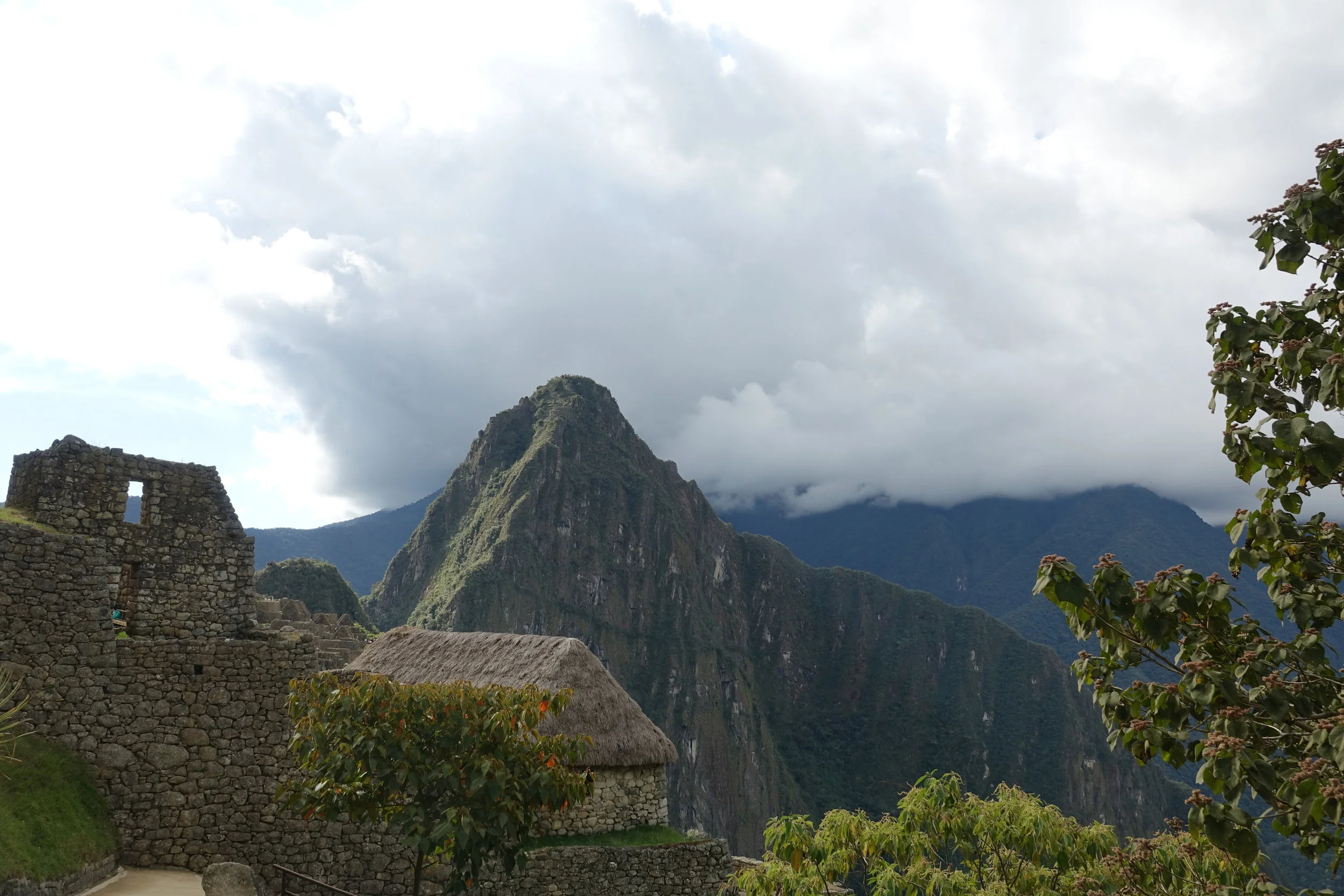
It has been a while since I basked in the sensations and imagery of Peru - so long in fact that I fear the memories are soon to fade away into vague impressions. That’s the trouble with all this traveling and being on the move, forever leaning into the next thing…. Yes, you can keep a journal to report the events, and yes, you can take hundreds of photographs to preserve visual memory, but the fact is that as you move through time, the experience of the past becomes eventually weaker in your consciousness. There is something I won’t lose track of and that’s how much I felt I belonged there during those two weeks - in Cusco, Machu Picchu, and cruising on the Amazon waters. It appears that I can be a visitor and simultaneously a member of the world I’m visiting. What does this feel like? No fear, staying the present moment, the pleasure of looking another person right in the face and feeling at ease, the expanding of the sensibilities…

In the last number of weeks I have been spending a lot of time trying to figure out how to publicize my memoir and to create a persona that the reading public can identify with. This is tricky stuff. Why? Because I frequently see myself as a chameleon, moving in and out of direct experiences with diverse peoples and feeling the boundaries fade: the Vietnamese, the French, Italians, Burmese, the Indians, the East Africans, Mexicans, Guatemalans, and Peruvians. As I sifted through the final edition of the book in one last proofread, what I saw unfolding was I often began with an agenda in my mind, and then ultimately that vision disappeared into the cultural milieu I traveled through. I don’t believe I ever wished to maintain a solid identity as a privileged American burdened by insatiable hunger and need for learning, because when I was a young girl I lived amongst Americans abroad whom I found to be sadly lacking in character and good will, and I knew that I was not like them. These kids were from military and foreign service families and sadly they had zero interest in becoming a part of the country they lived in - in this case, Italy.

My memoir was built on the scaffolding of a series of narratives that described my journeys as a transparent character who arrived in, say, Vietnam, with a series of questions about how this country recovered from the catastrophic war, or when I went to Venice and planned to capture an essential human loneliness as I walked the damp alleys of the city in the middle of winter; in both these cases I felt myself becoming less defined as a physical entity called Mag, and morphing into a murky and transparent presence as I joined the new environment in search of understanding. I certainly felt aware of myself as American when I was in Vietnam, but at the same time I felt I melted into my various adventures there, as I did in Venice where I could actually observe myself from the outside traversing the city with my Canon hanging around my neck. The chaos of India made defining myself as American close to impossible as I remember. There were so many discrepancies in sensory experience, and as an older middle aged Buddhist-inclined woman, I sought to grasp the almost unfathomable story of India’s spiritual and social culture, losing track of the personality that was Mag. In Cambodia as I followed my guide through the Killing Fields amidst all the gentle, copper skinned peoples still mourning the holocaust, all I could think of was how the skulls and bones being displayed there were those of my brothers and sisters, that we humans all share the same skeletal form and live with the same aspirations, suffering similar losses….

Why do I now point the finger at the question of how it feels to be American traveling in foreign lands? Because in this country that I have finally come to love we are bombarded with racist ideas that say being American - especially WHITE American - is the only way that is acceptable and right. Across the country flames of resentment and fear have been fanned, and we find a growing part of our population wishing to chase out all the brown and black skinned beings who have been living productive lives here. Our world view has been shrinking dramatically as more and more people are holding onto the worst biases of the white race. Nationalism is glorified, as tanks and military parades are displayed on the television, and no one seems to care that the President of the United States rants incoherently and regularly against minorities who happen to be doing all the hard work in America. Of course, the insanely true thing - sort of in the same category as our evolution from the apes - is that the only human beings in the United States who can lay claim to true American-ness are the Native Americans, formerly (incorrectly?) called Indians. And if we take a good look at their history, we must then hang our heads in shame. This population with their reddish brown skin and deep connection to nature and the spirit world was subjected to continuing horrors (theft of land, disease, warfare, etc) by the European colonists who came here theoretically in search of religious and political freedoms. In truth, they felt entitled and they came here to conquer this vast land for all its riches.

As Jill Lepore’s eloquent book, These Truths, announces, our government was founded on some pretty lofty, eloquent, and practically unmanageable principles. There were all those righteous and elevated words: “life, liberty, and the pursuit of happiness,” “all men are created equal,” and “government by the people, of the people, and for the people…” When you read about these early times, you can’t help but feel a deep admiration for the idealists who, though many were slaveholders, seemed to desire to do good for their fellow human beings and to create a just society. What you see unfold as you follow the narrative is that the experiment in democratic ideals was fraught with trouble and caused great suffering. Man’s greed, for one, seems to be at the root of this, I think, that and his sense of entitlement and rightness, his pride and unwillingness to let go of individual power and to think communally… Our history has been filled with so many who couldn’t measure up to the high ideals, and then there were a handful who tried and almost succeeded: Lincoln, FDR, JFK, even Barack Obama …. These men held a vision that reached past nationalistic views, they saw this country as a player on the world stage, and they valued the contribution of the thousands upon thousands of immigrants, many with different colored skin, who helped build our institutions. I believe that they could see beyond our boundaries and value the richness of the cultures that America had in fact taken in.

Returning finally to the book that I spent so many years crafting and trying to shepherd into the world, I realize now that one of the most important messages it offers up is that we humans become richer (in spirit), more compassionate, and more intelligent if we engage our curiosity and investigate this complicated and beautiful world. I guess I’m making an argument that it was in traveling to all those far away places that I salvaged my sanity, became a truly interesting evolved person, and saw my own authenticity. In the end the reader discovers that my character is not simply that of an American but rather a citizen of the world. I really like thinking like that. Yes, I do.

Mag DimondComment
The Gifts of Peru
DSC03660.jpg

I bought a t-shirt when I was in Peru that pretty much sums up one of my deepest wishes in life - it says, “mas amor, por favor,” OR “more love, please.” When I look back on my recent two week adventure in Peru, my mind is awash in warm, loving images and memories. Whether it was clambering awkwardly up the steep and uneven steps of Machu Picchu, my knees aching and screaming at me, or marching through the damp aromatic jungle in the Upper Amazon, I remember kindness and generosity - hands always reaching out to help, and a remarkable local guide called Denis on the boat who kept saying, “mi amigos,” (my friends) with his irrepressible smile and twinkling dark eyes. There is so much else I recall: the catching of my breath when I again caught that first glimpse of Machu Picchu perched on the mountain of green earth surrounded by more mountains that shoot up into the sky - the perfection of those meticulously cut stones that spelled out a complex communal Inka structure the historians are still ruminating about, and then in the jungle there was the adoring gaze of the drowsy three toed sloth with her baby, or the electric blue Morpho butterfly dancing so fast through the air, over water and beyond trees that you might as well give up the idea of photographing it…. Other companions on the journey: the goofy and elusive pink (yes, really pink!) river dolphin who teased us endlessly as we cruised along on the river searching for wildlife, daring us to be quick enough to capture his brilliant leaps from the water….

We were taught so many things by the passionate Peruvian guides and naturalists working for National Geographic: about the vast wisdom of the Inka culture, their mechanical genius and spiritual mysteriousness, we were told about the horrors of Spanish colonization, about the Inka savvy when it came to growing food in beautiful terraces where the temperature of the earth changed from one level to the other, and through it all we heard their passionate defense of their land and the rainforest.. We were eager students most of us, absorbing quantities of information about the landscape, wildlife, history, and even instructions about making ceviche and Pisco sours! It will take some time for the dust to settle in this writer’s brain, but happily I’m in no hurry.

As I pour over the pages of my journal looking for some gems of understanding, I find one of these staring me in the face, an amazing piece of wisdom. As I sat on a skiff with about ten other travelers scanning the landscape for birds, I heard Javier our guide tell us that the Amazon rainforest has been called “the lungs of the world” because 40% of the world’s oxygen comes from this vast lush area that harbors over 500 species of birds, hundreds of monkeys and snakes, and thousands of fresh water fish, and which to many people’s surprise is a fragile landscape. To know this for the first time felt like a gift and it softened my heart. People in all territories across the globe are connected to this mysterious place through the air that they breathe. The rainforest is a vital part of our human survival no matter where we reside.

This landscape’s vulnerability comes about because of the rising and falling of the rivers which divides the year here into two seasons: high water and low water. Large numbers of trees grow shallow roots and because of this don’t live terribly long lives (200 years max), and so there is perpetual death of plant life here in the Upper Amazon alongside the explosion of bird and insect populations. The trees may look mighty but they are fragile. When the Andes glaciers melt each year, the area becomes flooded, the bases of these enormous trees sinking deeper and deeper in water, and then come June the water recedes, we are able to see the complex network of roots and all the plant life that was previously invisible in the deep dark waters. There’s something magic about that, I think. The landscape is truly impermanent, as it transforms itself every 6 months and forces all its living creatures to adapt accordingly. I learned a little on this journey about the intelligence of trees and their capacity to communicate, and more about the genius of ants, the daunting and magnificent tarantulas, and the reason the sloth is so sloth-like (doesn’t eat protein, therefore less energy). We humans do not have the corner on intelligence, I’d have to say, and for some odd reason I’m reassured by that.

What we do have, however, is the power to act in defense of this unstable and exquisite landscape, using the intelligence that we do possess. All who care about animals and life on earth should visit the Amazon basin to learn about the wealth and the precariousness of life here, and to marvel at its extraordinary beauty. As human beings we are connected to all animal life and it is in places like the African bush and the Amazon that we may see this relationship so clearly…

Another image I have in my head now is that of floating on the glassy green river water and feeling as though I were traveling back in time. On these waters I move farther and farther away from my familiar zone, and deeper into a maze of waterways into the unknown where the vast canopy of trees hangs elegantly overhead and the monkeys dart from branch to branch, and the white egrets soar above in groups of a hundred or more. Traveling on the water is immensely calming and meditative, and as I let this calm hold me, I had a sense I was suspended in timeless space, feeling connection to everything I witnessed: warm breezes, soaring birds, leaping fish, plump white clouds turning brilliant pink in the evening, my fellow travelers oohing and aaahing and sometimes holding hands …

I felt blessed to be in the midst of all this beauty and to share it with my beloved daughter and son in law. We smiled a lot, laughed, ate and drank our share, and frequently felt celebratory. Were we celebrating just being on vacation, or instead celebrating the fact of our own aliveness and connection to all we came in contact with? I recall gratitude arising quite frequently…. I can’t name all the numbers of birds we saw nor all the fish we were told about, or even the exquisite tropical fruits we ate, but I can tell you that this bounty of life transformed each and every traveler on the Delfin II, the beautiful little riverboat we called home for one week.

So I return again to love and our human hunger for it. There are so many places we can go to experience it … the high mountains all over the world that are enveloped in mysterious clouds, the endless aromatic bush country of East Africa, the wild and frigid waters of the mighty Pacific Ocean, the steamy Amazon jungle alive with voices, the cathedrals replete with gold and paintings, and so many more … places created of earth and by man. To reach out with our eyes and open our hearts in such places is to know ourselves more fully, see ourselves as players in the vast context of life on the planet, and to recognize love..

Mag Dimond
Bridges, Not Walls...
IMG_0564.jpg

A few days ago I sat in the afternoon sun with my dog Peaches and stared at the Golden Gate Bridge and a flood of memories started to come: I remembered sailing under the bridge to cast my stepfather’s ashes into the Pacific just before downing a bottle of Dom Perignon, I remembered sailing under that glorious bridge on a gala Princess cruise to Alaska with my sad widowed mother and my reluctant husband, I recalled an old friend of mine, a lonely creative genius, throwing himself off that bridge many years ago when his solitary life became intolerable, I remembered returning to San Francisco after a month on silent retreat in Marin and feeling great joy as I came across that wild orange bridge and saw my city of hills bathed in sunlight, winking at me. This bridge has been a presence in my life ever since I was a very young girl sleeping at my grandmother’s house listening to the beautiful moaning fog horns at night… Each time I take another look at this landmark hovering over the Pacific I feel deep gratitude for the bridge, for the land that it connects, the beautiful bay it traverses, the sense of possibility it suggests …

This brings me to the subject of bridges in general. You have to admit that bridges have grandeur, right? They make a statement, they stretch between two previously unconnected bodies of earth, or in metaphorical terms between two human beings. Some bridges come to mind which are quirky statements of man’s imagination and ingenuity: the Brooklyn Bridge, London Bridge, the Ponte Vecchio over the Arno, the Pont Neuf in Paris, the Golden Gate and its sister bridge, the Bay bridge stretching from west to east with its sparkling nighttime lights… I think what is grand about bridges is that their job is to connect humans to a place, bringing each person who crosses to a previously unknown experience. Bridges help us continue on our journey of discovery.

Recently I wrote a blog essay about my trip to Japan with my daughter in 2016 and in that piece I reflected that the gifts we both received along the way felt like bridges, allowing each of us to cross over from where we were previously to some place new and different. When I went to Japan then I was leaping into terrain that was different from most of my other voyages. The divide between American and Japanese cultures is significant: Japan is genteel and well ordered while America is informal, sometimes arrogant, and distinctly chaotic, Japan is devoted to the cultivation of culture (the arts in particular) while America prides itself on technology, Japan is devoted to the idea of lineage and tradition in all its cultural expressions, and America seems to operate from a zoom lens approach to addressing what works in this present moment…. The histories are different and the traditions have little to do with one another. There were several occasions on that trip where I felt that my daughter and I crossed over an invisible “bridge”: a tea ceremony in Kyoto where we sat in silence and listened to the wisdom of the buddhist abbott, the visit with the indigo master where we were invited to engage in understanding just how exquisite fabrics are dyed, and finally a beautifully crafted feast by our guide and host in his elegant home that afforded us not only immense sensual pleasure but also a delight in being part of a true art form. Each of these occasions was a distinct moment in time where we became immersed in the experience without many words or explanation.. Experiences like these exceed anything one might come across in a guidebook that attempts to instruct us about culture. These moments hold us, move our hearts, and stay with us as we move forward on our journey.

The Buddhists tell us that in direct experiences we cease to cling to our own identity. We become the essence of awareness itself as our overactive minds cease to be in control. This is the most powerful learning. And that is one of the primary reasons I get on airplanes large and small to go to far away places — for the discovery of something different than that which I carry. There’s another reason we travel: to learn something about who are as human beings. I’ve had more revelations about myself in foreign places than I’ve had in any therapist’s office, school room, or words from my elders. The book that I recently completed, Bowing to Elephants, is a testimony to this, in a way. In India I discovered my deep felt discomfort with social disparity and the class system, in Italy I discovered my deep longing for beautiful comforting food and ancient history, in Paris I realized that my deepest desire was to look at and pay respect to art, in Cambodia I came face to face with my ongoing fascination with death and loss, and in Burma I saw reflected back to me that which I had so hungered for: lovingkindness. On each of these adventures I had to cross a bridge of sorts to get to where I needed to be, and through each of these experiences I became an expanded, more fully realized person.

Walls can impede our progress on this path of realization. In my case there were invisible walls between me and those I loved, walls that spoke of fear and distrust. There were walls of denial. And all I could think of was that I needed to understand more, to stretch myself to see myself more clearly. In the end we can’t navigate this life if we don’t understand the signposts and know who we are. Every time I think of the concrete historical walls in our history, the Berlin Wall, the Wall of China, and most recently a surreal and cruel comic book version of a wall separating us from our neighbors to the South, I realize these are structures meant to separate not unite, impede not assist, and I think of the Robert Frost poem that says, “good fences make good neighbors.” The poet never meant this literally of course. Most walls and fences are meant to stop people in their journey forward, divide them from one another, and turn our geography into a checkerboard.

Less than a week from now I will embark on yet another odyssey with my daughter, this time to Peru’s land of the Incas and the Amazon, and I look forward to crossing some bridges and finding out more about who I am and what I love. My return to blogging will resume following my return in about three weeks. I’m thankful for all of you who are listening…


Mag Dimond
From the Heart

There is something uncanny about lying horizontally with one of those crisp uncomfortable white paper shirts around your naked form, and listening to the guttural clunky sound of your heart working, its valves opening and closing in repetition so that the life-sustaining blood can travel where it needs to. The technician said that it reminded her of an old washing machine chugging along…. I looked up at a little monitor and saw an image that resembled anatomical depictions of the human heart that I’ve seen before, and I watched this mysterious form vibrate in and out, in and out. The human organism is something to marvel at… and we do not give it enough credit.

From this heart I want to speak to that which is precious and dear … my little dog Peaches whose huge round dark eyes seek me out for reassurance and also send me unconditional love, my daughters who have been perhaps the primary teachers of my life, as they reminded me that love is all that really matters, love and listening and being present, my city of San Francisco which offered me a safe and beautiful and textured landscape to grow up in — its hills, golden light, its foreign voices, and brilliant blue bay … Also dear to me the wild parrots of Telegraph Hill, brilliant green survivors in our urban world, the thousands of books I surround myself with that represent worlds I can enter at will, my cats whose beauty and subtlety go beyond any words I can conjure (cats are like that!), and the vibrant and brave colors in my mother’s abstract paintings, my grandmother’s piano that reminds me of being a little girl sitting on a piano bench and hungering to play music, the moments in early morning when I sit in meditation on the couch with a dog on one side and a cat on the other. I could go on, and the fact that I could go on and on tells me I have a remarkably rich life. Yes,, I have continuing pain in my knee and my hip, and yes, I don’t sleep very soundly anymore, and yes, I get fatigued sooner than I would like, and worry more than I should … but the fact is that I still inhabit this life of a comfortable solitary lady in a cozy old San Francisco house, a lady who at the age of 70 finally completed the narrative of her lonely and exquisite life. There are gifts all around us; for those of us fortunate enough to have shelter and a few good friends, there’s an abundance of opportunities for gratitude. If we were to forget about these gifts, we wouldn’t have the strength of spirit to live with the harsh inequities of today’s world. The truth is: the darkness and the light are always doing their dance around us…

After I left the doctor’s office this morning I noticed a lightness and bounce in my step. After images were rendered and a grueling trek on the treadmill was completed, I was told that my heart appeared to be a sturdy and healthy organ, and I was able to breathe in and out and feel thankful. If it weren’t for that heroic organ doing its job, I wouldn’t have been able to enjoy my cured salmon and glass of rose at lunch, nor the smile on my dog’s face when I came in the front door…. There’s something transformative about learning what is real: that you are for the time being robust and well, that there are likely more days to relish your time on this earth. And in that moment of seeing what is before you, you let go of the fearful stories, the fight or flight instincts, and you simply breathe … and smile to those around you.

In spite of all that feels overwhelming and impossible, we are blessed to inhabit these human bodies with their beating hearts.

Mag Dimond
The Need for Sanctuary

“Opelousas, Louisiana … While the victims of the arsonist who burned down their houses of worship offered forgiveness, investigators rushed to assemble the scant clues, worried the assailant would strike again …”

This showed up on the NY Times front page of Friday, April 12th, a modest article on the left hand side; an understated article but it was on their front page. As some days went by, I realized I had seen nothing of this story on the news outlets I’m used to checking out: PBS, CNN, or MSNBC. It seemed then that this extreme act of destruction in the South was destined to evaporate into the vast clouds of forgotten news stories, like the horror in New Zealand, the tragedies of opiod deaths, or the grimy stories about our president’s crimes … Our news cycle is speedy, tragedies come at us in dizzying succession, and we end up losing track of many of the serious and tragic losses.

And then the Cathedral of Notre Dame in Paris went up in flames on Monday April 15 and the story stood front and center - in the NY Times and the major broadcast media — as a dire narrative of loss to a city, a country, and the world spilled out before our eyes, keeping us focused on the crumbling spire of the church amid angry orange flames. The mystery surrounding the cause of this tragedy gave people pause, I’m sure, given all the acts of terrorist violence we’ve become used to. And so people sat with their heavy grief and wondered, “how could this happen?” ( how could something so vast and so ancient be vulnerable?). It’s a terrible sign of our times that we assume there must be a villain to blame, that we would feel better if we had a face to lay the blame on.

The 3 hundred year old churches in Louisiana were burned to the ground by a living breathing man whose name is Holden Matthews, son of a local deputy sheriff, who clearly had hate in his heart. Some facts were revealed in time, but the story continues to be fuzzy and unexamined. Sadly I don’t find this surprising. There are probably reasons for this which news junkies like myself wouldn’t understand. As the Notre Dame news cycle unfolded, we learned that it most likely was a surreal accident without a perpetrator; so instead of railing at a nefarious villain, the people rallied around the cries for help in restoring the majestic old cathedral. Out of the ashes, a rebirth… I am pretty sure that the pain in the hearts of those affected by the destruction of these places of worship is equal, though the two scenarios are indeed very different; deep loss causes pain, no matter what the lost sanctuary’s story offers us.

These two events occurred close together and they nudged me to reflect deeply on the place of churches in our human lives. Churches and temples and mosques are sanctuaries for people around the globe - places where they can go to find communion with themselves and with the larger guiding spirit in their lives. They are places of community where people take refuge from everything from danger and despair to just plain disillusionment and boredom … places where they can rediscover their own true nature. In this 21st century we navigate a world fraught with discord and division and a mindless drive to make money, achieve power and success, and thus we must have places of quiet where we can see and feel the authentic quality of our lives. There are churches in cities, villages, remote islands, fields, and the desert; there are temples in the jungles and forests and mountain tops — all places of peace and respite.

I wasn’t raised a religious person, but when I look back on my many decades of travel I realize I always sought out churches or temples wherever I found myself, whether it was Italy, or France, Spain, Burma, Thailand, Mexico, Japan, or Vietnam… The whole idea of sanctuary tugged at at my heart then and it still does. When I enter the temple I am able to reconnect with myself, and most importantly I find communion with the people of that place, smelling the burning candles and incense, looking up to dusty religious paintings, glorious stained glass, and feeling my feet happily resting on the cool soothing earth. I feel less lonely. And I’m able to remember that I have an honored place in this mortal life.

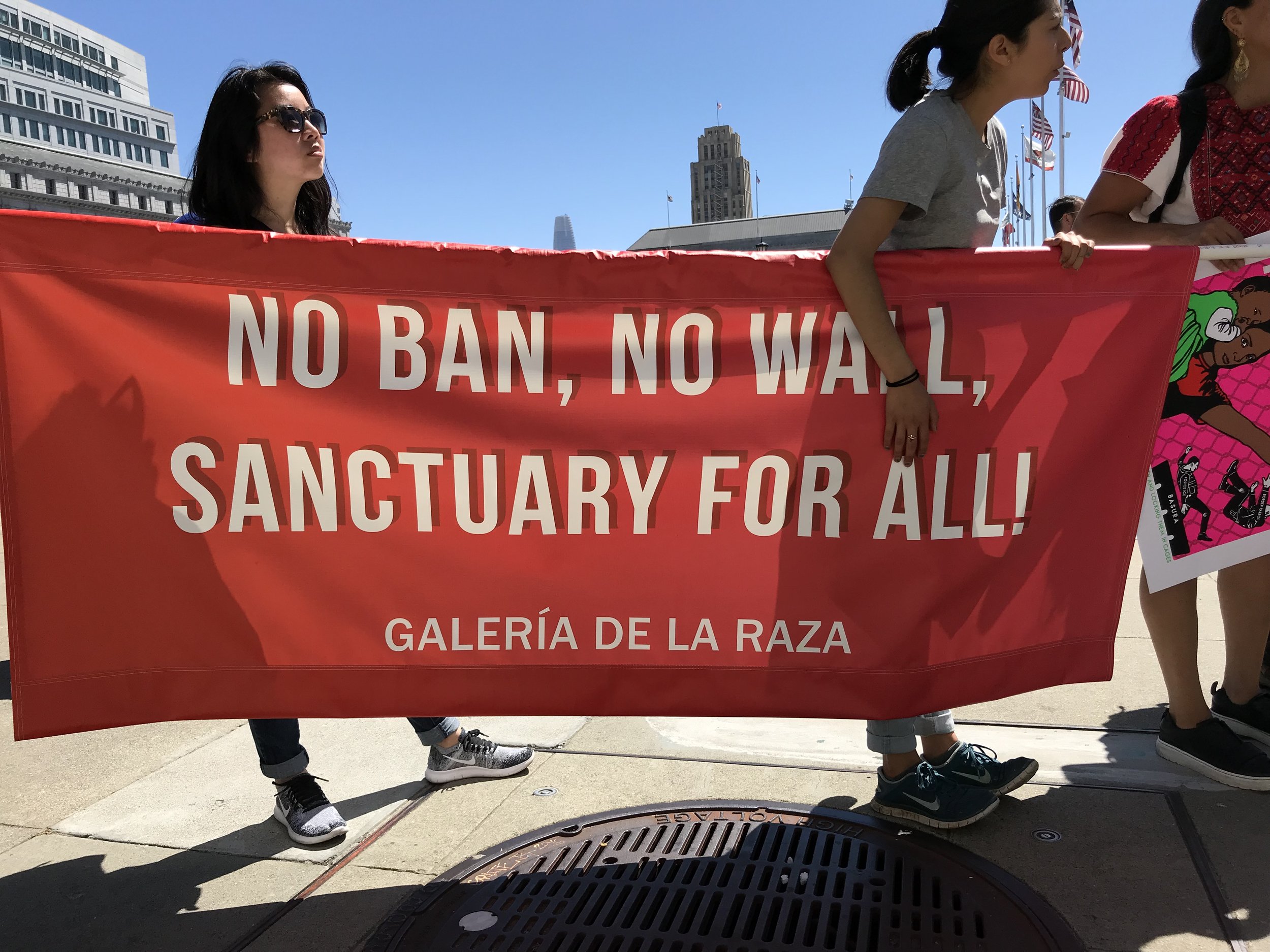
All of us humans deserve sanctuary no matter what our color, language, traditions, or spiritual practice. These places of refuge are necessary so we can support and strengthen our compassionate hearts and minds to forge ahead and make a difference in the world.

I think we should pause and send out blessings and well-wishing to those who have lost sanctuary in this historical moment: the people of Louisiana, the citizens of France, and the population of Sri Lanka who just a few days ago suffered an horrific assault on their country, one most likely driven by a inexplicable hatred of their religion. We should remember that religion doesn’t live only inside the temples and mosques, but it is in play on the streets of cities and villages and roadsides everywhere. Look around you when you walk the streets, stop in the park, find a sweet quiet place in a cafe, and see if you can’t notice others attempting to center themselves in the midst of chaos, looking for their own sanctuary, pausing in that moment to be reminded of their essential life purpose.

Mag Dimond